Award Nominated Short Stories of 1973
So I tried for two weeks to write a blog post about awards in art, why I find them interesting, and ultimately why I’ve been buying and reading books that have won awards like the Hugo and Nebula. I feel like there’s something there, specifically in how award recognized authors like Robert Silverberg and Lois McMaster Bujold were huge critical and commercial successes in their day and yet are not well remembered in the modern era (note that Silverberg doesn’t even appear on that NPR top 100 list that has haunted me since I was a teenager).
In the end, all my drafts ended up floundering, blabbering on and on, never getting to any kind of coherent point or idea. I kept getting distracted trying to create advanced stats metrics for comparing how different awards and ranking systems value authors, but I think that’s both putting my personal brainworms more on display than I’m comfortable with and also the concepts are too half-baked to be worth sharing with the world.
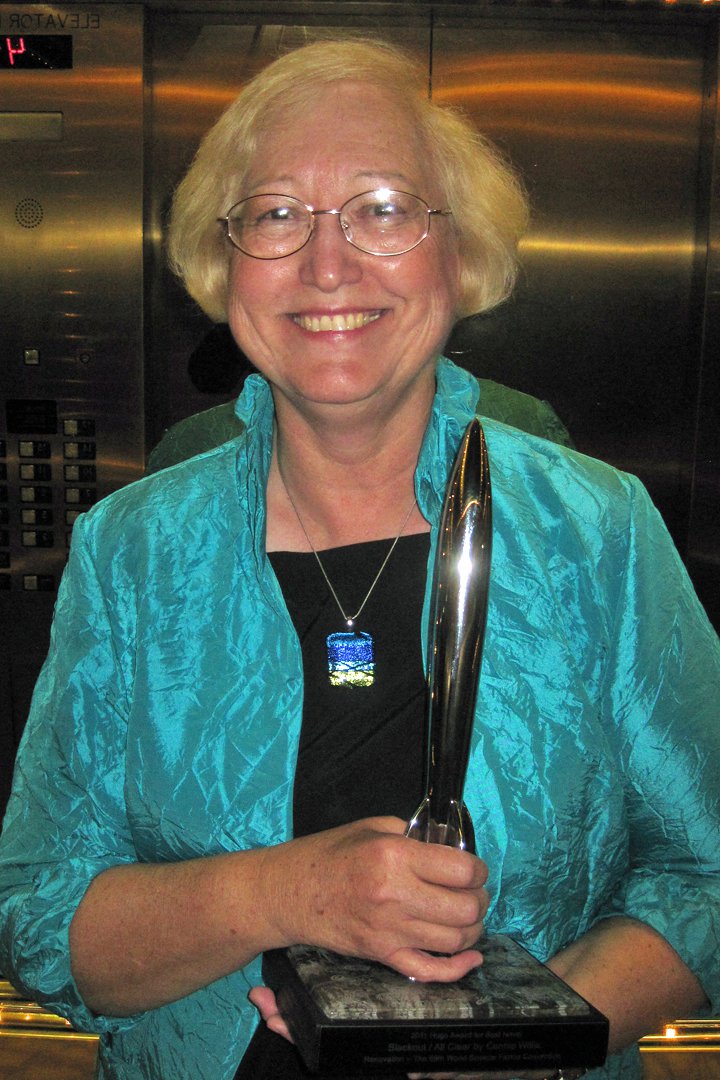
Any awards based advanced stats for SF authors would likely rank Connie Willis highly, seen here holding one of her 11 awards, the most of any author.
So there I was, stuck with bulky unprintable first drafts and no blog for this week. Here’s what I decided to do instead: an overview, reading, and review of the Hugo and Nebula nominees for best short story from 1973. Why? Well I still wanted to discuss the Hugo and Nebula awards, and this gives me an opportunity to do that, give some author bios focused on a specific era and discussing specific work. Why 1973? Because I already owned all the short stories I’d need to read across my various collections and anthologies. Heads up: I’m going to try not to outright ‘spoil’ these stories, but in discussing them I will reveal details that might be uncovered more naturally by reading the text. If that’s going to bother you, read the stories first! But also be honest, you’re more likely to want to read the stories after finding out a bit about them. Spoilers are fake. So sit back, relax, and lets talk about some short stories that World Science Fiction Convention voters and the SFWA thought were good in 1973.
The Awards
It seems best to start off with a little background on the major science fiction literary awards, so let’s start with that.
The Hugos
The Hugo Awards are a fan voted award held annually at WorldCon, a long running major American science fiction fan convention and are the oldest continuous science fiction literary award, dating back to 1953, (although they weren’t given out consistently until 1959). They’re named for Hugo Gernsback, founder of Amazing Stories, an important early science fiction magazine, and a man who was one of the key figures in shaping the themes and aesthetic of the science fiction genre. This, as you might imagine, was not a purely neutral process – Gernsback became an increasingly controversial figure in the field as the new wave began to gain prominence and it become more acceptable to openly criticize the literary and ideological character of the Golden Age of Science Fiction, which Gernsback had been prominent in shaping. But hey – the world fantasy award trophy was a bust of H.P. Lovecraft until 2015, so pobody’s nerfect.
The Nebulas
If what the hugos have going for them is longevity, the nebulas have the advantage of being voted on by the Science Fiction and Fantasy Writers Association. That’s right, they’re the Oscars of Speculative Fiction, whereas the Hugos are closer to an Empire Magazine fan poll or the people’s choice awards. The Nebulas had existed for less than a decade in 1973, and started off hot by giving their inagural best novel prize to what is probably now the most famous science fiction novel of all time, Frank Herbert’s Dune. Three of the next four years gave prizes to New Wavers Samuel R. Delany and Ursula K. Le Guin, with a one year break to give a prize to forgotten YA novel Rite of Passage by Alexei Panshin. In 1971 Ringworld fever reigned among both sides of the Hugo/Nebula divide and in 1972 the hoi polloi Hugos went with Phillip Jose Farmer’s To Your Scattered Bodies Go whereas the literati Nebulas chose Robert Silverberg’s A Time of Changes: his only win across 18 career nominations between both awards.
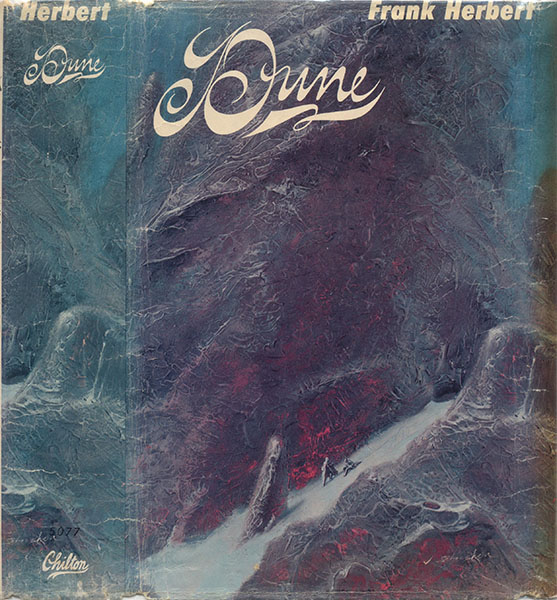
Saying the first book you ever gave best novel to is Dune is a pretty good way to give your award legitimacy. Though the Hugo's gave their first best novel award to The Demolished Man by Alfred Bester, which is also supposed to be very good, so points to them also.
A Word on Short Fiction Categories
The third major award (and only other award of significance in 1973) is the Locus Poll, which I will reference occasionally but will not be considering for my list of stories. That’s because The Locus Poll uses different short fiction categories than the Hugo and Nebula, making it a big pain in the ass to compare nominees between it and the other two awards. Let’s review some the terminology and definitions. After some back and forth over the first decade or so, the Hugos eventually settled on a division of short fiction into three different categories based on length: short stories, novelettes, and novellas. When the nebulas began, they followed suit. The breakdown is as follows:
| Hugo/Nebula | |
|---|---|
| Short Story | Less than 7,500 words |
| Novelette | 7,500 to 17,500 words |
| Novella | 17,500 words to 40,000 words |
I couldn’t find the criteria the Locus poll used to seperate short fiction in 1973, but it seems like they didn’t establish a “novelette” category until 1975, and so novelettes and short stories were grouped under short fiction for the first few years of the award’s existence. As a side note, I originally planned to read some of the Locus stories as well, and did read The Second Kind of Loneliness by George R. R. Martin (that name rings a bell for some reason...) – I didn’t like it!
1973: The Results
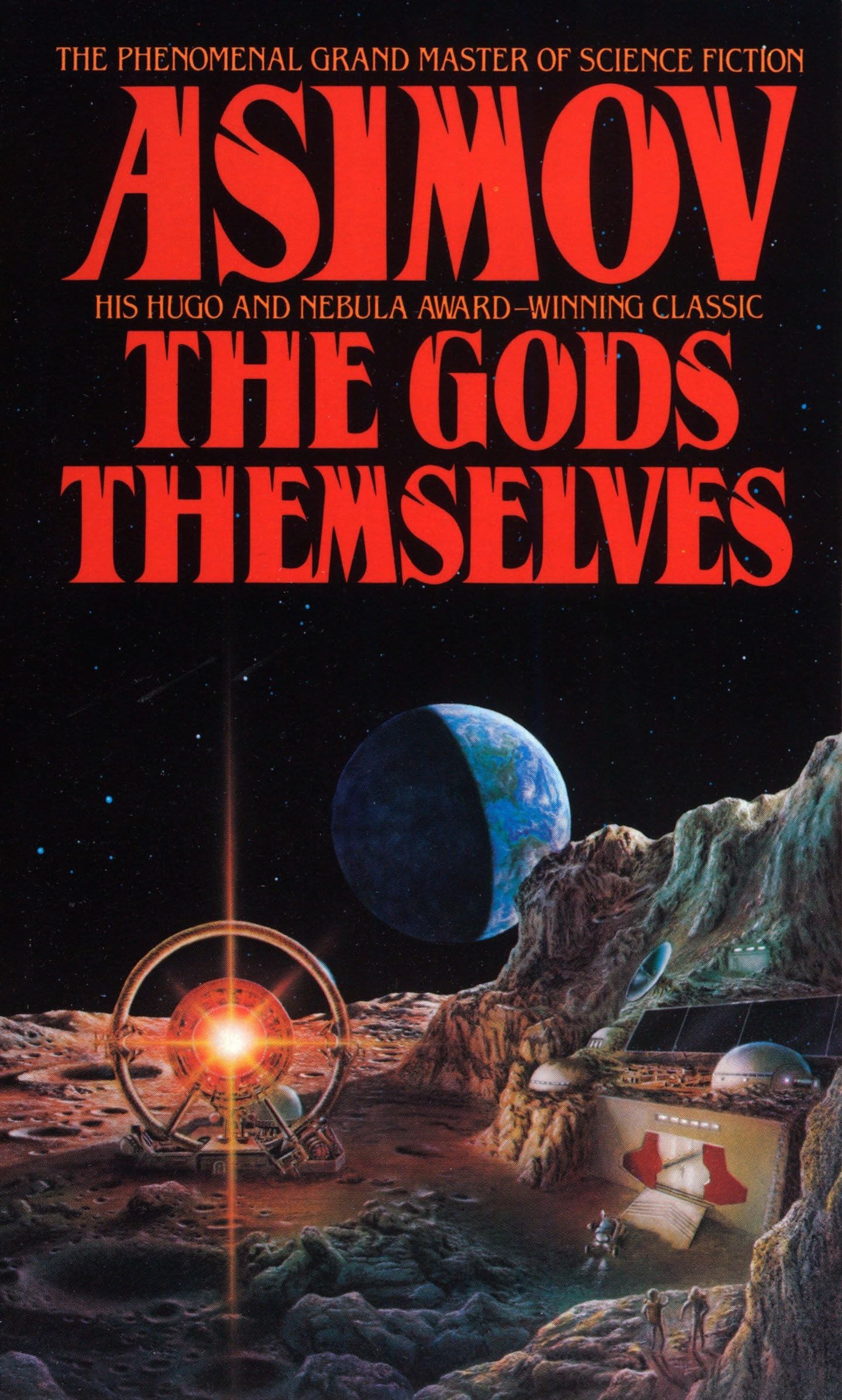
Asimov and Clarke sweeping the awards in back to back years in the 70's with this and Rendezvous with Rama is a lot like the Oscars giving best picture/director honours to Munich and The Departed in the 00's. Although Spielberg had already won earlier for Schindlers List. So I guess it's not like that at all!
In the best novel category, The Gods Themselves by Isaac Asimov swept all three awards. While it reviews fairly well online today, I’ve heard it described as uneven by multiple reviewers. However good it may have been, there’s no question that with his first novel in six years, both fans and authors were champing at the bit to have an opportunity to celebrate Asimov, who was by 1973 a living legend. His only previous best novel nomination was a Hugo nod for The End of Eternity in 1955, and in the decades since they’d given him not just one but two irregular awards, a Special Award for an article he wrote in 1963, and in 1966 The Foundation Trilogy won an award for being “the best SF series of All Time”. As for the nebulas, a couple of his short stories and his previous Novel, Fantastic Voyage, had been on the first ballot, but this was in the early days of the nebulas when they went straight from long list to winners, so these “nominations” are mixed among over a dozen other candidates. Of note otherwise at the Hugos is the double novel nomination for Robert Silverberg, with Dying Inside and The Book of Skulls possibly splitting the ballot for the prolific author. In the novella category the award went to Ursula K. Le Guin’s The Word for World is Forest, a story of forest colonialism that only becomes more and more relevant as the years go on.
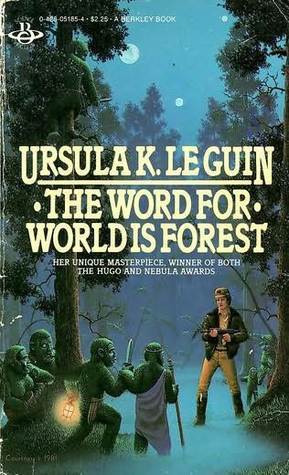
New Wave or not, the Hugos and Nebulas agreed: Ursula K. Le Guin was good at this 'writing' thing.
Though Asimov reigned at the Nebulas as well, their ballot is much more provocative than the Hugo’s, rounding out the bottom with the debut novel of a young George Alec Effinger, What Entropy Means to Me, Norman Spinrad’s satire of fascism in the science fiction scene, The Iron Dream, and John Brunner’s deeply bleak The Sheep Look Up. Where the Hugo’s moderate their choice of Golden Ager Asimov with a New Waver in the novella category, the Nebulas doubled down on the big three with Arthur C. Clarke’s A Meeting with Medusa taking home the Novella award (Heinlein is nowhere in sight on either ballot). Both awards picked Poul Anderson’s Goat Song as Best Novelette.
The Short Stories and Their Authors
Frederik Pohl
By the early 1970’s, Frederik Pohl had been an important member of the science fiction community for over 30 years. He got his start as a member of the Futurians, an influential New York Science Fiction fan society that battled in the early days of the scene with rival East Coast fan groups and contained a number of future titans of the genre, such as C.M. Kornbluth and Donald Wollheim. He was a prolific author, publishing a number of novels in the 50’s and 60’s, and short fiction from the late 30’s on, often collaborations with Kornbluth (like their mutual most famous early work, the 1953 novel The Space Merchants), but he also teamed up with Jack Williamson and Lester del Rey. His main awards recognition prior to 1973 had been as editor of the magazines If, Galaxy, and Worlds of Tomorrow which all received nominations for the Hugo award for best Professional Magazine. If won three years in a row, from 1965-1967. 1973 was Pohl’s first taste of recognition as an author at the major awards, as he wrote two stories discussed below, and The Meeting w/ Kornbluth was a co-winner of the Hugo for best short story. Additionally his novella The Gold at the Starbow’s End was nominated at all three awards bodies and won the Locus. Pohl would go on to win several major novel awards, most notably a sweep in 1978 with his most famous novel, Gateway. He was named a Grandmaster of Science Fiction in 1993.
Pohl is an author who I need to grapple with more fully. I’ve only read a handful of his short stories and feel mixed on them overall, but he was extremely prolific and wrote major work across at least four decades. When I first started taking vintage science fiction more seriously I would frequently confuse Frederik Pohl with Poul Anderson, because the most notable part of both their names is the part which I would pronounce in my head as “pole”.
Shaffery Among the Immortals by Frederik Pohl
Originally published in The Magazine of Fantasy and Science Fiction, July 1972Nominated for the Nebula Award for Best Short Story 1973
Read by me in Platinum Pohl: The Collected Best Short Stories
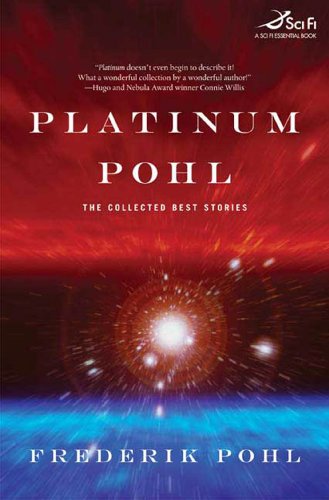
This is a nice modern hardcover covering most of Pohl's most notable work. Found my copy at a library sale. Hoping I like some of his other stories better.
It’s intriguing to me that both of the Pohl stories I’ll be discussing are very light on science fiction. Shaffery Among the Immortals is about an astronomy pofessor in South America who is desperate to be famous but everything he touches fails, his wife hates him, he’s probably going to lose his job, and he’s generally pathetic. He ultimately achieves immortality and gets something very significant named after him but not in the way that he had in mind. It’s fine. I often appreciate a tongue in cheek story like this, and there are two others discussed below with a comparable tone that I like more. At the same time, regular readers of this blog will know I appreciate the story of a sad sack more than most, but this guy isn’t quite miserable enough for me. The stories of miserable failures that really sing for me tend to be heightened to a degree of total mania. Think the utter self-involvement of Dostoevsky’s man from underground, or Moorcock’s Karl Glogauer literally pulling himself up on the cross – Shaffery is just too ordinary and dull to really excite me. On the other hand, the writing is strong! Pohl has a good voice and an eye for detail. The best part of the story is when he slows things down to describe Shaffery getting drunk on a little yellow raft alone. The ending is a fun twist but it just doesn’t do enough to really pay things off for me. Overall it’s fine.
C.M. Kornbluth
Cyril “didn’t actually have a middle name” Kornbluth was, like Frederik Pohl, a member of the Futurians. The men’s careers are so closely linked not only because they were frequent collaborators while Kornbluth was alive, but also because after Kornbluth’s death in 1958 at the tragically young age of 34, Pohl completed a number of Kornbluth’s unfinished short stories and novels and published them as posthumous collaborations. When Kornbluth is remembered at all in the modern era it’s usually for his short fiction, which has a darkness and irony uncommon for his era that anticipated the turn to come in later decades. Stories like The Little Black Bag and The Marching Morons have been recognized as among the best short science fiction of the 20th century. The story below was the first Kornbluth story I’ve read and unfortunately I hated it. But! I have a nice vintage edition of “the best of C.M. Kornbluth” and am looking forward to cracking it and giving him a second chance.
The Meeting by C.M. Kornbluth and Frederik Pohl
Originally published in The Magazine of Fantasy and Science Fiction, November 1972Won the Hugo Award for Best Short Story of 1973 (Shared with Eurema’s Dam)
Placed 9th in the Locus Poll for Best Short Fiction of 1973
Read by me in Platinum Pohl: The Collected Best Short Stories
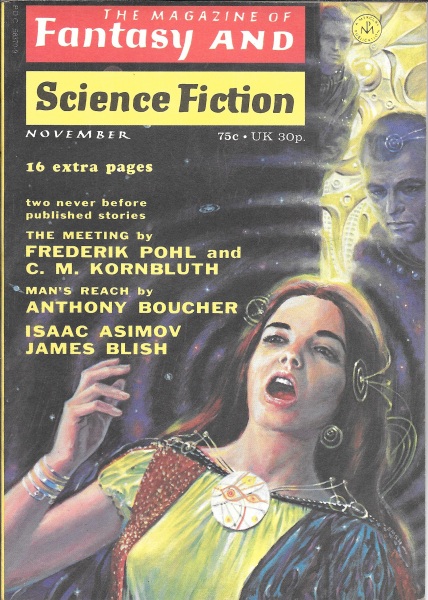
Seems like the art on this guy is depicting Man's Reach by Anthony Boucher and not The Meeting, and I'll be honest: good call.
This gets a big red X from me. I’ve certainly read more blatantly offensive stories than this, but rarely are they this big of a bummer. A story that asks what right a neurodivergent child has to their perfectly good body when there’s an allistic child whose been in a car accident that could use it instead. I’m far from the morality police with old science fiction, and I actually think this same idea executed differently could be very effective. I can imagine this exact premise being used to tell an SF body horror story about the dehumanization of disabled people that is actually thoughtful in the way this story only thinks it is. Unfortunately, the story is told entirely by and through the disabled child’s caregivers, depicted as good-hearted but long suffering and resigned to the child’s non-person status. The child at the centre of the story is only ever described second-hand, and their absence from a story entirely about them makes it difficult to read the story as anything but agreeing that the child is not a person. I did a little bit of digging and I genuinely believe that this story was a fan favourite due to an understanding that it was likely to be among the last Kornbluth stories to ever be published. Frederik Pohl had been completing Kornbluth’s unfinished stories since his death in 1958, and this was the first new story from this posthumous collaboration since 1962. I suspect (and hope) Hugo voters were less excited by eugenics and more trying to celebrate Kornbluth’s life and career with a posthumous Hugo award (which he had never won). C.M. Kornbluth may have deserved an award, but definitely not for this story.
Joanna Russ
Joanna Russ is one of the most important science fiction writers and critics who ever lived. She was a trailblazer in feminist science fiction studies, a leading writer in the 60’s new wave, and won several major awards over the course of her career. When looking at her writing in the context of awards (probably a silly thing to do, but here we are), it’s worth noting that the majority of her recognition came from the Nebulas, which were voted on by her fellow authors and in general partial to the New Wave. Note that Russ’s friend and contemporary Samuel R. Delany was also a favourite of the Nebulas and fared poorer at the Hugos (4 lifetime wins at the Nebulas vs 1 at the Hugos). If we’re thinking about how to understand these awards, which so often agreed on their picks for best novel, the preference of the Nebulas for the literary and politically engaged new wave authors and the preference of the Hugos for more conventional styles and narratives seems like a good place to start. Prior to 1973 Russ had been nominated for best novel at the Nebulas twice and best novelette once. Her most famous novel, The Female Man, would come in 1976, set in the same universe as When it Changed. The story below is still the only work by Russ I’ve read, and her books are extremely hard to get your hands on in used bookstores, so I will probably be reading her in dribs and drabs, individual stories included in anthologies and the like, until I get lucky somewhere or finally give in and buy her work (shudder) *new*.
When it Changed by Joanna Russ
Originally published in Again, Dangerous VisionsWon the Nebula Award for Best Short Story of 1973
Finalist for the Hugo Award for Best Short Story of 1973
Finished 6th in the Locus Poll for Best Short Fiction of 1973
Finished 20th in the 2012 Locus Poll for Best Short Story of the 20th Century
Read by me in The Big Book of Science Fiction
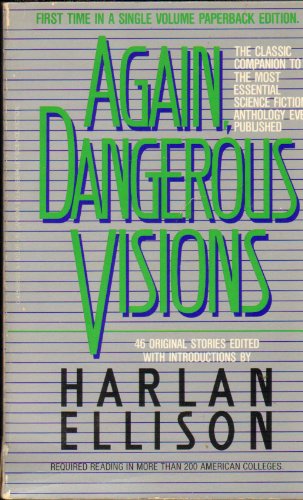
Had the miraculous experience of finding this edition of both Dangerous Visions books on different trips to a local used book store. The second one doesn't quite have the eye-popping line-up of the original, but it sure has this story, and the Gene Wolfe story later - hard to argue with that!
I mentioned this story in my article about The Big Book of Science Fiction, and there I said that it’s great and that you should read it without learning anything about it. However! Here we are, I’ve backed myself into a corner where I have no choice but to discuss the story. And so it goes. If you do a quick read through Russ’s wikipedia page, one of the themes discussed is Russ’s anger. Her fiction was angry, her criticism was angry, and her correspondence was angry. She was angry at the way women were treated in science-fiction literature, and she let it show in her criticism, and she was angry at the way women were treated in the world and she let it show in her fiction. That’s a lot of emphasis on anger, and anger is not the wrong word to use: Russ used it herself. At the same time anger can be a deep and complex emotion filled with shades of many other emotions cascading over and through each other, none of which is captured by the word ‘anger’. That’s what When it Changed is about.
The story of a planet colonized by humans long ago where there was a plague that killed all of the planet’s men and cut it off from communication with the rest of human colonized space. The women of this planet survived by genetically engineering themselves to reproduce with each other, without men. They built a new society, a new culture, by women, of women, and for women. All this is implied, or told quickly in sidebars. It’s background information delivered quickly and elegantly, a sketch rather than an encyclopedia article. The story itself is about the return of men to the planet, ambassadors from human space, come to fold the planet back into civilized society. The story is about the emotions the women at the centre of the story feel as they try to explain that they want to preserve their way of life to a pair of men that they know are only humoring them. The fusion of despair, rage, fear, and mourning Russ conveys is so powerful, I can’t help but think of the wave of reaction that defined the 70’s as the pushback to the radical 60s. It’s hard not to feel that we’re living in a similar moment now. When it Changed is one of the strongest SF short stories ever written and it’s certainly the best of those nominated for awards in 1973.
James Tiptree, Jr.
As discussed previously on this blog, James Tiptree Jr. Was the pen name of Alice Sheldon, a woman who concealed her true identity for the first decade of her writing career and was known for her excellent and surreal short fiction which often dealt with gender, identity, and desire. A New Wave writer like Russ and Delany, it shouldn’t surprise you to find out that she was a regular nominee at the Nebulas. Unlike Russ and Delany however, she did just as well at the Hugos across her career, winning several of each. As of 1973 she’d previously been nominated for Best Short Story at the Nebulas in 1970 for her story The Last Flight of Dr. Ain. The story below is still the only work I’ve read by Tiptree, but I have her large collection The Smoke Rose Up Forever and plan to read that as soon as I can clear some books off my plate.
And I Awoke and Found me Here on the Cold Hill’s Side by James Tiptree, Jr.
Originally published in The Magazine of Fantasy and Science Fiction, March 1972Nominated for the Nebula Award for Best Short Story of 1973
Finished 4th for the Hugo Award for Best Short Story of 1973
Finished 4th in the Locus Poll for Best Short Fiction of 1973
Read by me in The Big Book of Science Fiction
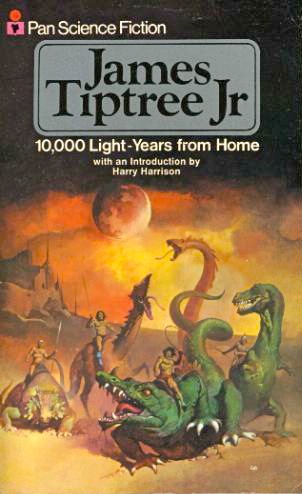
I would kill for this edition of this book. I haven't read enough Tiptree to claim if this cover is unreflective of what's in the book, but let me tell you, from what I know of her this is not the vibe! That just makes it cooler though. Need.
I mentioned this story briefly in my blog post about the Big Book of Science Fiction, where I called it a great story that I could have discussed in place of Russ’s When It Changed. While I prefer Russ’s story, I stand by that statement. Cold Hill’s Side is the story of the human race enthralled by aliens, sacrificing everything and everyone to simply be closed to those fascinating beings from other worlds, giving up pride and dignity and resources and life itself simply to be near them. It’s a horror story about desire and the power it gives others over you, and also a metaphor for colonialism. It’s a nasty idea that sticks its claws into you and won’t let go, and I’ve found splinters of it turning up in my own stories, which is always a sign of something powerful.
Robert Silverberg
I’m glad I get to talk about Silverberg here because as mentioned up top, he’s one of the main authors I had in mind when I set out to discuss the value of looking at historical award nominations as a way to learn about SF history. Silverberg is not widely read today, and surprisingly enough he DID write a bestselling fantasy series in the 80’s so you’d think he’d be locked into posterity like Terry Brooks and co. but (though I haven’t read it) I suspect Lord Valentine’s Castle wasn’t enough of a straight-forward tribute to Lord of the Rings to become mandatory reading for generation after generation of fantasy fans. That said, if you look at Hugo and Nebula nominations, you will learn to recognize Silverberg’s name very quickly because he has the most Best Novel nominations of all time with 18. Silverberg began his career writing traditional science fiction in the 40s and 50s before re-inventing himself alongside the arrival of the New Wave in the 60s, which is generally agreed to coincide with a significant increase in his profile and the quality of his work. Silverberg was a prolific editor and anthologist and writer in other genres (including erotica), all likely because Science Fiction did not pay well until book deals began to grow exponentially in the early 80s. (We have since reached a state of equality. Science Fiction doesn’t pay well, and neither does anything else). In 1973 Silverberg was coming off of a Hugo win for Best Novella in 1969, Nebulas for best Short Story in 1970 and 1972, and his lone career best novel win, a Nebula in 1972 for A Time of Changes. This was only the second Silverberg story that I’ve read, and I have enjoyed both and am eager to read more of his work.
When We Went to See the End of the World by Robert Silverberg
Originally Published in Universe 2Nominated for the Nebula Award for Best Short Story of 1973
Finished 3rd for the Hugo Award for Best Short Story of 1973
Finished 14th in the Locus Poll for Best Short Fiction of 1973
Read by me in Universe 2
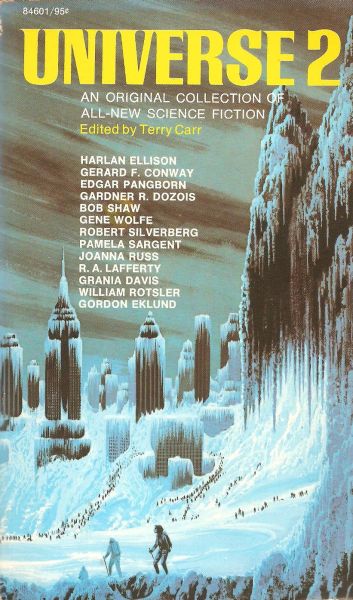
I'm excited to read the rest of this collection after the two stories I read for this were both good. Terry Carr was a very influential anthologist and editor for decades but I really haven't read enough stuff he's edited to have a lot of context. I believe he was also an important member of the fanzine community before he went pro - will be learning more.
This is a satire of 60’s bourgeois culture transplanted to a future where everything going wrong in that decade got worse at an exponential rate. A couple at a dinner party is excited to brag to their friends about how they’ve done the newest thing: a vacation to the end of the world. Of course it turns out that several other couples have also taken the trip to the end of the world, and they all saw different ends of the world. They refuse to accept the possibility that they might be getting ripped off, and instead insist that the world could end many different ways at many different times in the future. The story is punctuated with apocalyptic snippets from the news that are so commonplace that no one really takes notice of them (boy howdy) and asides satirizing bourgeois culture like the main character being motivated to share his story of the end of the world because he thinks it’ll impress one of their friends’ wives who he wants to have sex with. It’s a good story. The satire is a little heavy-handed for me, but the juxtaposition of the world ending visions with the smarmy dinner party bullshit is effective. I enjoyed it.
Harlan Ellison
I feel like I’m always talking about Harlan Ellison on here but that may be because I just recorded a video talking about him last week. Hopefully that’s up by now (it’s not lol – keep an eye out, this week I hope). As I discuss in the video, Ellison was a dedicated short story writer in Science Fiction, Fantasy, and Horror and was one of the defining voices of short fiction in those three genres in the second half of the 20th century. Known for his anger, cynicism, and willingness to rub gatekeepers the wrong way, he was also an advocate for writers he respected and became a champion for material others were uncomfortable with publishing. His anthology Dangerous Visions, a collection of material from top authors that other publications would not accept due to its provocative content, was a smash success, one of the most beloved anthologies of all time, and he followed it up with a sequel, Again Dangerous Visions, from which two of the stories in this blog post were drawn. Ellison was no stranger to awards success before and after 1973, winning the hugo and nebula in 1966 for his short story "Repent, Harlequin!" Said the Ticktockman (yes, all his titles are like that) and winning his final award in 2011 with the Nebula for Best Short Story. He won over 30 other awards in between. In terms of short fiction by the authors discussed here, I’ve read more by Ellison than anyone else, and I have nothing but the highest praise for it. His tendency to be edgy and to rub up against the line of discomfort (and blow past it sometimes) can be eyebrow raising, but I think he always has a good sense of what suits the story he’s telling and it never feels like he’s being edgy out for its own sake.
On the Downhill Side by Harlan Ellison
Originally Published in Universe 2Nominated for the Nebula Award for Best Short Story of 1973
Finished 3rd for the Hugo Award for Best Short Story of 1973
Finished 13th in the Locus Poll for Best Short Fiction of 1973
Read by me in Universe 2
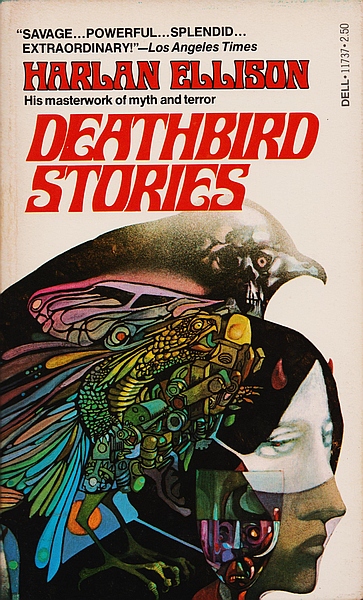
Maybe Ellison's most famous short story collection? He has so many. I have a copy of this as well and will be reading through the rest of the stories when I can find the time.
This is a story about a couple of ghosts in New Orleans who have to fall in love or they’re in big trouble. Also a unicorn is there. Ellison is in kind of wistful fantasy mode here, which is not something I’ve encountered much of in his other work I’ve read (which let’s be real, is just one collection from a guy who wrote hundreds of stories). This comparison is uncomfortable to make now for obvious reasons, but it does feel like proto-Gaiman, to which I say, Harlan Ellison may be like Black Sabbath in the sense that you can pick any one of his stories and turn its aesthetic into an entire authorial career, similar to the way single Sabbath tracks have launched entire sub-genres. The story is a dark fantasy incorporating ghost story, myth, and a degree of psychological realism. The ghosts need to confront the traumas and sins of their lives in order to become whole and escape their cosmic punishment. It’s neat – I liked it.
R.A. Lafferty
Raphael Aloysius Lafferty, yes that IS his real name, is a fascinating figure of 20th century science fiction. He wrote for about 25 years and was a figure of cult interest who routinely vexed the commercial public any time he seemed to be about to break through by making his work stranger, more enigmatic, and less conventional. His inclusion in discussions of the new wave reveals that the movement was more about style and disregard for convention than about politics or thematic interest, as Lafferty was a conservative catholic and it wasn’t exactly a secret. Still, entering the field at 45 he was a polished writer with a strong voice and a sardonic tone that fit in well with amongst the new wave writers, and he was championed by Ellison and Delany among others. In some ways his Hugo award for Eurema’s Dam in 1973 may have been the peak of his mainstream career, as he had already released his most acclaimed novels in the 1960s and his following would only grow more cult-like and less mass as the years went on. In addition to the story below, I’ve also read Nine Hundred Grandmothers (the story, not the collection), and it’s one of the best short stories I’ve ever read. Guy can writer. I have his novel Past Master as well, and I’m excited to crack that open soon.
Eurema’s Dam by R.A. Lafferty
Originally Published in New Dimensions IIWon the Hugo Award for Best Short Story of 1973 (shared with The Meeting)
Placed 16th in the Locus Poll for Best Short Fiction of 1973
Read by me in in New Dimensions II
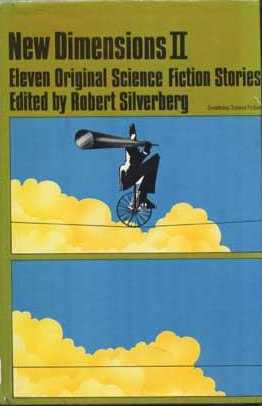
I knew I had become a complete sicko when I was excited to dig a pristine hardcover copy of this off of the neglected anthologies shelf at the local used bookstore. And look! It's already come in handy.
In the Encyclopedia of Science Fiction, they describe Lafferty as a writer of tall tales whose tone was fundamentally oral. That describes this story to a T. This is a delightful rambly story in the mode of Twain or the like, about a foolish central character who gets into a series of comical situations. Eurema’s Dam is about a Albert, and the story opens by saying even his mother would have to describe him as a slow child. Albert is repeatedly described as being completely inept and unintelligent by other characters and the narrator, which he compensates for by building machines, and the story evolves out of the central gag that though Albert is a genius the like of which the world has never seen, his eccentricities, inability to comply with social expectations, and genuine deficiencies in other areas mean that he is held in contempt by the world (indeed, even by his own creations, as he regularly invents robots that can function well in society in ways that he can’t, which then inevitably despise him – being able to perform societies expectations breeds contempt for those who cannot). Even as his inventions fundamentally transform the world for the better, he is relegated more and more to the pitiable margins. It’s a fascinating story because it can simultaneously be read as a story about ableism, disability, and neurodivergence, or as a story about the contempt of society for brilliant inventors and entrepreneurs who (in the author’s vision) spur innovation and progress. The duality of Lafferty I suppose! I like the story though, I’m partial to these kind of wacky tall tales about flawed genius inventor types, though the fantasy they represent has been creating some problems for us in the modern era.
Gene Wolfe
Above I said that out of the authors discussed in this blog, I had read the most short fiction by Harlan Ellison. I had to be careful to include that “short fiction” caveat, because as regular blog readers will know, I’m in the tank for Gene Wolfe. Last year I reviewed(+) Gene Wolfe’s Peace on the blog, which I loved, and in my favourite reads of 2025 youtube video I put his The Knight/The Wizard/The Wizard Knight at number one, and of course The Book of the New Sun was in the inagural class of the Hinterlands Canon. I don’t know if I’ve done a proper introduction for Gene in any of those places, so I’ll do a small one here. Gene first published science fiction well into his adulthood after years of rejections while working as an industrial engineer. By the way – shout out to the Encyclopedia of Science Fiction Entry on Wolfe – some of the most impressive critical writing on an author I’ve ever read in my life. And who deserves it more? Wolfe is arguably the greatest science fiction writer of all time, and we meet him here in the early days of his career. He had received his first award nomination in 1971 for the short story The Island of Doctor Death and Other Stories (humorously collected in The Island of Doctor Death and Other Stories and Other Stories), and alongside the story below his novella The Fifth Head of Cerberus also recieved nominations in 1973. The Fifth Head of Cerberus would be expanded into the novel of the same name later that year. (Technically not his first novel, but in a practical sense, his first novel). Wolfe was never an awards darling per se, but the longevity of his career combined with the extremely high quality of his work meant he racked up an enormous number of nominations, though the density and obscure nature of his prose meant that he was never at the top of the mainstream and didn’t perform as well in fan voted awards like the Hugo. I recently began reading The Wolfe at the Door, a posthumous collection of Wolfe stories from across his career, and am excited to read much more of his short fiction because it turns out, hey it reads like his novels, by which I mean, very weird and very good. Read Gene Wolfe!
Against the Lafayette Escadrille by Gene Wolfe
Originally published in Again, Dangerous VisionsNominated for the Nebula Award for Best Short Story
Read by me in Castle of Days
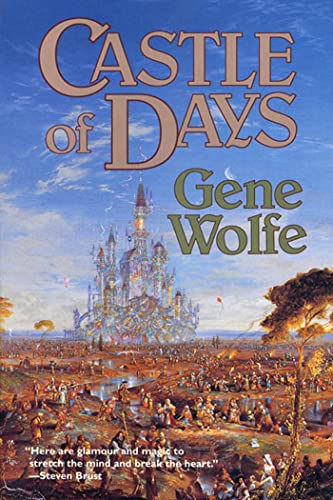
So Castle of Days is a combination of the short story collection Gene Wolfe's Book of Days with Gene's collection of essays about Book of the New Sun, The Castle of the Otter. The title is a gag on a common mispronunciation of "The Castle of the Autarch".
As expected from a Gene Wolfe story, you read this and you go “what the hell was that”. In this case, it’s doubly impressive, because it’s like four pages. 2000 words max. I went back and forth on it, because it’s so short and ephemeral in that frustrating Gene way, but eventually I came around on it. It’s just so good, and so typically Gene. A German WW1 pilot now living in America carefully re-creates his fighter plane from the war, fabricating replica parts by hand to detailed specifications while having arguments via mail with other dedicated plane fans about whether his replica is accurate enough. This is one of the most Gene Wolfe-ass characters of all time, a type of guy more used to being on the other side of the piece of paper. The reader and writer side, rather than the main character side. Oh yeah, and while he’s up in the air he sees something from another time. The story is inexplicable, strange, and rewards rereading without ever providing closure. Yep, Gene Wolfe wrote this all right.
Here are my final rankings for the best award nominated short stories of 1973. The two best ones were the ones I already read before I started this project? What the hell?!
- When it Changed by Joanna Russ (Nebula winner)
- And I Awoke and Found me Here on the Cold Hill’s Side by James Tiptree, Jr.
- Against the Lafayette Escadrille by Gene Wolfe
- On the Downhill Side by Harlan Ellison
- When We Went to See the End of the World by Robert Silverberg
- Eurema’s Dam by R.A. Lafferty (Hugo co-winner)
- Shaffery Among the Immortals by Frederik Pohl
- The Meeting by C.M. Kornbluth and Frederik Pohl (Hugo co-winner)
P.S.
This was like 3 times longer than my “rambling” failed first drafts. Oops! Fuck! Shit! Hope you enjoyed.
Links and Recommendations:
My recommendation this week is to stay cool. It's hot in many parts of the world, including where I live, and I'm not loving it.
In the past week I finished my re-read of William Gibson's Neuromancer and watched Ghost in the Shell 2: Innocence for the first time and I recommend both of those. Neuromancer was a book I wanted to re-visit before putting it in the canon, and now I am 100% certain it's going in there. I don't put movies in the canon but Ghost in the Shell 2 rules, I recommend that too.
Thanks for reading! Physical Annual Zines were mailed out like a month ago now, so hopefully they've all arrived. I will put it up digitally in the next week or two. Zine #2 is In Production. In the meantime you can STILL get Hinterlands #1, here.
I should have a new youtube video up within the week, but in the meantime, check out my one and only video here.
Okay bye!