Dungeons: A Blog Post about Dungeons
When I re-launched The Hinterlands last fall with regular blog posts and my first zine, I had another project that was supposed to go with it. It was going to be a podcast called Dungeons: A Podcast about Dungeons (the name format was stolen from the very funny Stores: A Podcast about Stores). Between writing fiction, blog posts, and making a zine (and later making youtube videos), it turned out I had projects to keep me busy, and the podcast never made it past the planning stages. It had slipped into the bucket of abandoned projects alongside my newsletter where I was going to review every Star Wars Book, Comic, and Game in release order, my One Piece Podcast, and my blog where I was going to write an essay about every chapter of every book in the Wheel of Time Series.
But then!
My library hold of Dungeon Crawler Carl, which I had placed in anticipation of discussing it on the podcast, was ready for pickup. I read it, and while reading it, remembered the podcast, and my love for dungeons. My love for dungeons flowed through me as I read every word of the book’s 450 pages, it spoke through my mouth, and in my voice it said, “This book sucks ass! This is awful!”
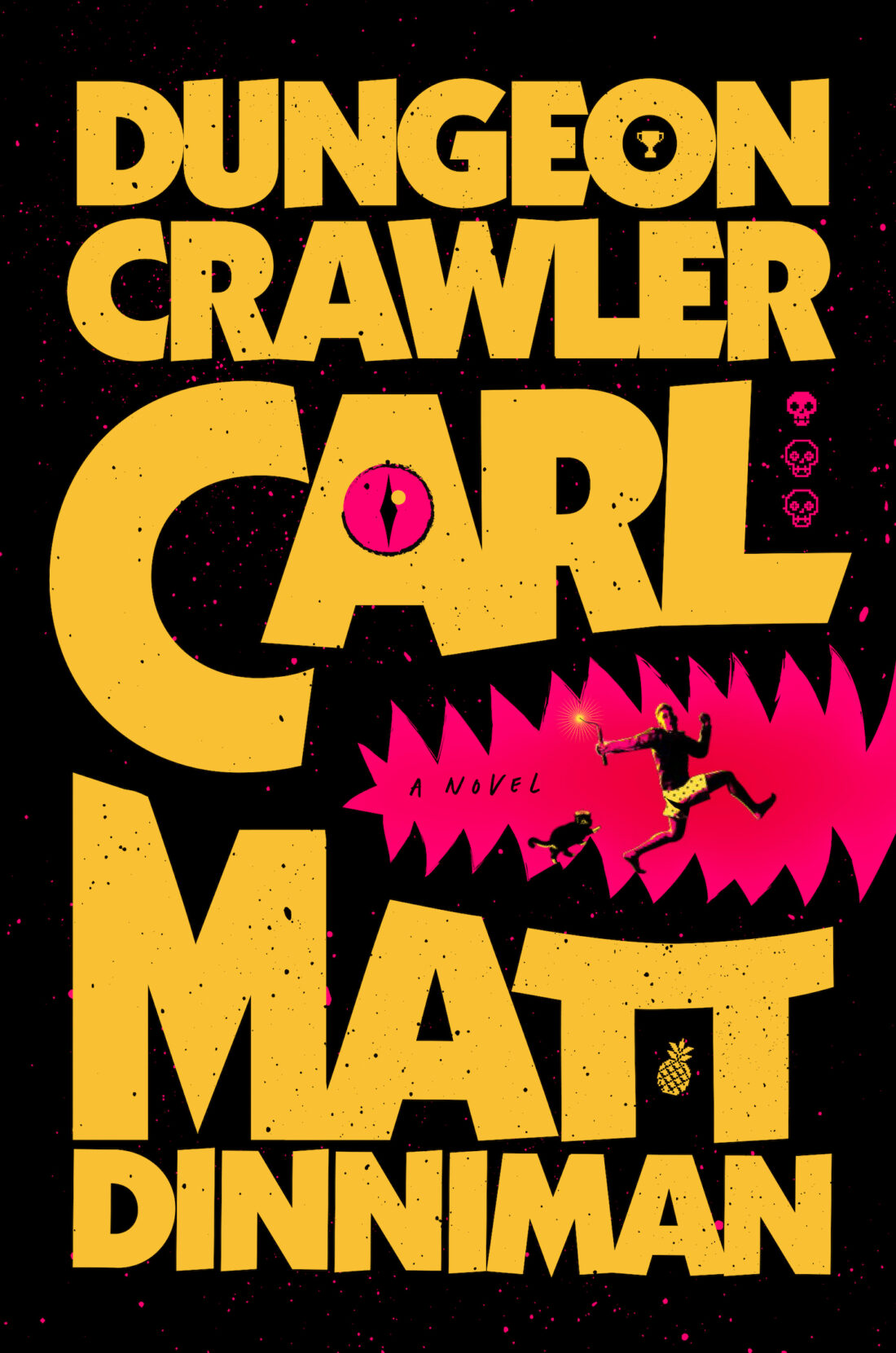
This thing has like a dozen sequels, all of them longer than the first 450 page book, and they each sell like a bazillion copies. The only thing I can compare it to is Ready Player One and those I Was Reincarnated as an...etc anime series. It's not good!
Let’s start by talking about what I mean when I refer to a “dungeon”. When I talk about Dungeons I am referring to a concept that today is largely understood through the lens of video games. Though the Dungeon has its roots in myth and literature and came into its modern form through the medium of table top roleplaying games, (indeed, the Dungeon creates tabletop roleplaying games as much as its created by them, and pre-dates the name that made it famous), its clear the concept has been devoured in popular culture by its digital offspring, the video game dungeon.
A dungeon is a location in fantasy and related genres, often in a video game, where treasure and monsters are found. Generally a dungeon consists of multiple layers, and the more layers one passes through, the more dangerous the dungeon becomes and the more valuable the treasure becomes. A dungeon can be an obstacle to be overcome, an optional zone that can be ignored, or a dungeon can even be the entirety of an experience, a book or game set entirely in a dungeon. The dungeon is so entrenched in culture that numerous tropes, traditions, and structural expectations are now established enough that they can be subverted and parodied, making it valuable to unearth and remember their origin points.
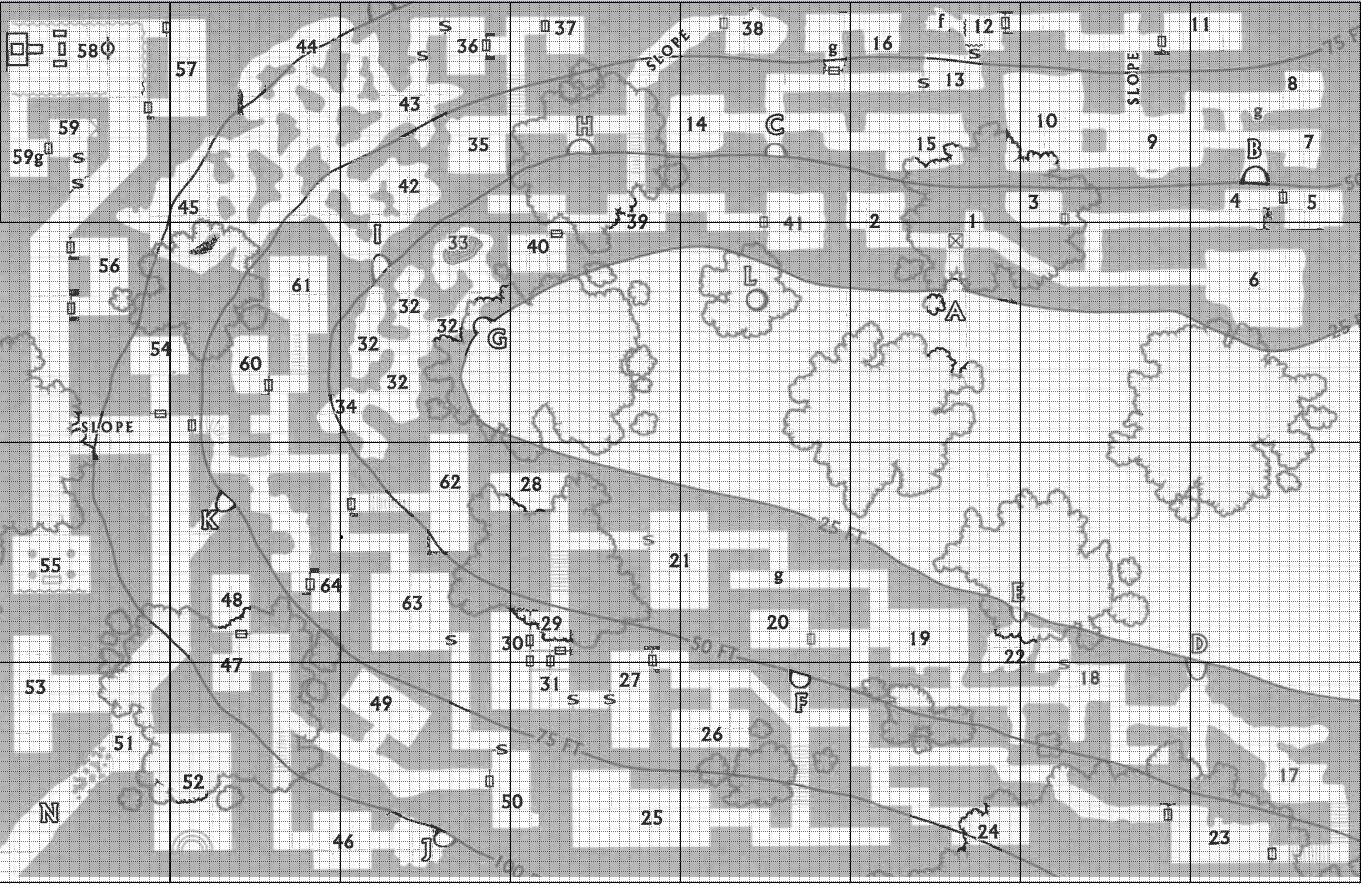
These are the Caves of Chaos, the original dungeon included in the D&D Starter set.
For the pre-history of the fantasy dungeon, I think there are three main influences that need to be understood, two ancient, one modern. The first is the origin of the word itself, which comes from the french donjon, meaning “keep” as in a castle keep. The transition then, to Dungeon meaning a prison inside a castle, is fairly straightforward. I like to imagine the English peasants, who were ruled by the French speaking Normans, only really interacting with the castle when someone was being put into the dungeon, and the word for the Keep then attaching to the only part of the Keep they interacted with. [Note – this may not be how it happened]
The medieval castle Dungeon, usually a small prison with a few cells, and often entirely absent from a castle, seems entirely unconnected to the enormous underground networks filled with monsters and treasure the term is often now associated with. I suspect the transformation begins in Gothic literature, where works like The Castle of Otranto enchanted the moldering castles of the medieval era with a sense of supernatural darkness and monstrousness. Simultaneous to the rise of Gothic literature comes the modern prison, which was exported from America to Europe in the early 19th century. The contrast of these modern scientific prisons (which we now know to be horrors of their own) to the cruel and bloodsoaked underground torture chambers depicted in the novels likely made the concept of The Dungeon resonate even more strongly. The Dungeon became a natural receptacle for much of the darkness of Gothic literature. Where would the ghosts of those who suffered in the age of darkness reside, if not the sites of their torment and death, the dungeon?
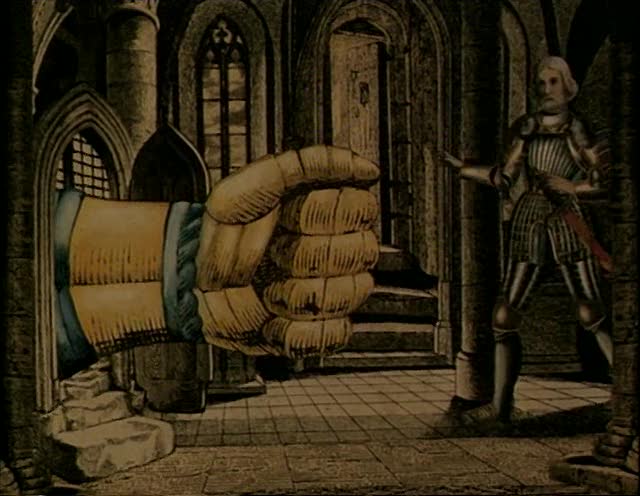
One of the main terrors of The Castle of Otranto is the giant knight's gauntlet that haunts the castle. Very cool! Exactly the kind of thing that should show up in a dungeon. In the novel it's deeply symbolic. In the dungeon you can whack it until it stops moving.
If Gothic literature makes the historical Dungeon into a site of supernatural terror, there is a much more ancient underground structure that invested much of its own supernatural terror onto the modern fantasy dungeon. This is The Labyrinth, the structure which caged the minotaur in the story of Theseus. The Queen of Crete had given birth to a child who was half bull and half man. The King built an underground maze of stone, the labyrinth, and locked the child inside. Fed on human sacrifices, it became the monster the King saw it as. In the end, Theseus braved the labyrinth with a spool of thread and a short sword. He slew the minotaur and followed the thread to find his way back out.
Labyrinths have long had a special place in human culture and perhaps even the human mind beyond just this well known story. The maze reoccurs again and again throughout human history and culture as a symbol of the divine, the mystical, and the unknowability of human fate and the future. Labyrinth symbols appear in medieval European Christian settings, Scandanavian fishing villages, in many parts of the Roman world, and in many places humans have gathered across time and culture. The symbolic resonant of the labyrinth makes it a potent tool for storytelling in the form of The Dungeon. As explored in Philotomy’s Musings by Jason Cone, the original gaming Dungeon was not a place of rational logics but instead a Mythic Underworld, a scar in the heart of the world with a malicious consciousness which expands ever outwards, thwarting interlopers and not bending to rational logics. Its useful to note that in early iterations of Dungeons and Dragons, the dungeon and its floors were frequently referred to as “mazes”.
I've referenced the OSR blog scene on here before as deeply inspirational to me - this piece is the closest I've come to writing something in that zone, and although it's entry level by design I'm nonetheless excited to be able to acknowledge them directly as I work off to the side.
The third and final inspiration for the modern fantasy Dungeon, both the most modern and the most directly influential, is The Mines of Moria, a location in The Fellowship of the Rings by J.R.R. Tolkien. If you’ve seen the movie or read the book, you’ll likely remember this location, as it’s one of the most memorable in the entire series. The Mines are a former home of the Dwarves, one of Tolkien’s “fantasy races”, another aspect of Lord of the Rings that has propagated throughout the wider culture. The Dwarves mined too deeply, and woke up something evil at the roots of the world. They fled, abandoning the mines, which lay desolate and became infested with goblins and trolls. The characters in Fellowship of the Ring are forced by circumstances to pass through the mines, and in doing so they create a prototypical dungeon experience.
First they must use deductive reasoning to determine how to enter the mines. After entering, they travel for a long way in empty maze like corridors, relying on faint clues to determine the correct way forward, and finding hints about the horrible things that happened there. They accidentally make a loud noise, alerting inhabitants of the mines to their presence, and engage in a pitched running battle with goblins and a troll, before encountering something too powerful for them to deal with. They flee the mines, overcoming environmental obstacles as they run, and ultimately one member of the party must stay behind to hold off the Balrog, the demon of fire, while the rest of the party escapes. Readers familiar with Fantasy tabletop gaming may notice how directly this sequence of events translates into a dungeon delving gameplay loop in a TTRPG. The only thing that’s missing from an iconic gaming dungeon is Treasure, which is hinted at by the presence of the Mithril that the dwarves once mined in Moria.
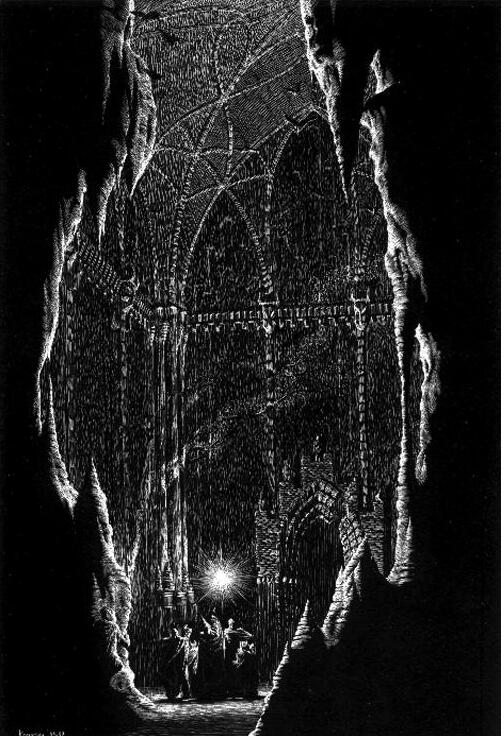
This black and white art feels strikingly like Lord of the Rings and at the same time is reminiscent of some of the more realism inflected early D&D art which would have been contemporaneous, and was also in black and white.
There were many stories prior to Lord of the Rings that contained prototypes for the fantasy dungeon that the creators of Dungeons and Dragons were certainly drawing from. J.R.R. Tolkien’s The Hobbit for one features an enormous hoard of treasure the heroes are seeking AND a dragon. Of course, Conan plundered many an ancient city and tower, Leiber’s Fafhrd and the Grey Mouser and Moorcock’s Elric all earned their share of treasure. But something about Moria, the way it has a history of triumph and tragedy, those ancient secrets... it contains, we learn later from a resurrected Gandalf, stairs that extend to the deepest places of the earth filled with ancient things of darkness, and up to the highest peak of the world. It contains danger and treasure, narrative and mystery - all the ingredients for that mythic underworld that is so satisfying to explore. When Dave Arneson and Gary Gygax were transforming their fantasy wargaming rules into something that more closely followed the actions of individual heroes, dungeons were one of the ideas they had for things those heroes could be doing. When left to their own devices, their players kept choosing to go back into the dungeon.
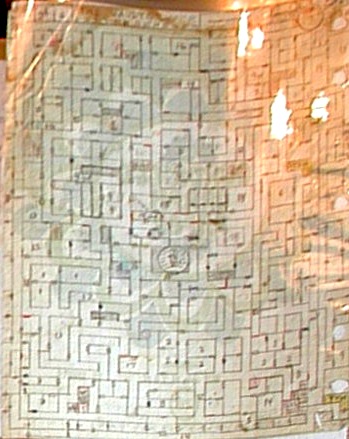
One version of Level One of Castle Greyhawk, one of the very first gaming dungeons, run in Gary Gygax's home game pre-dating the publication of Dungeons and Dragons.
I could go on and on about the development of the dungeon from here, but I’ve gone on for so long already, and I want to leave some material for my maybe someday existing podcast. In short, Gygax and Arneson develop these influences into the idea of underground labyrinths filled with treasure and monsters, and they become a huge part of the smash success of Dungeons and Dragons. This is quickly implemented into video games, particularly games that use procedural generations to create infinite randomized digital dungeons. These are games like Rogue, Wizardry, and Might and Magic, and they become hugely influential, especially in Japan where the Dungeon Crawler genre is a massive influence in both game design, but also eventually in comics and popular literature, with the rise of the Isekai genre (I will not elaborate).
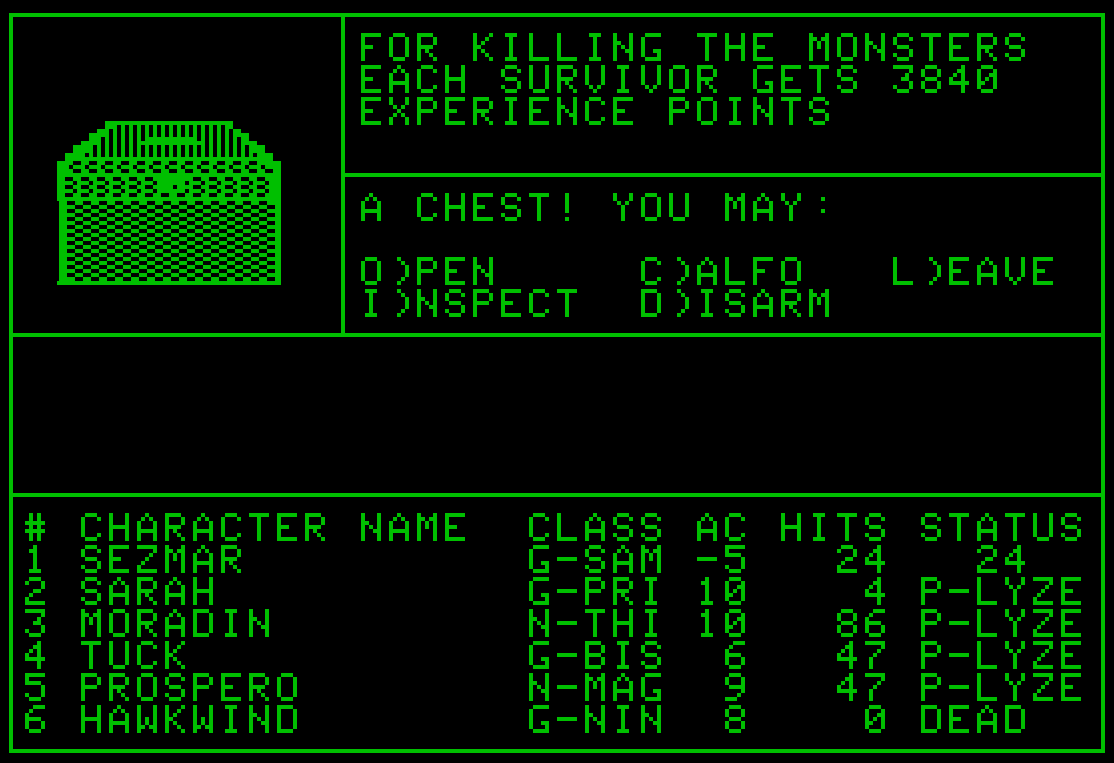
Screenshot of Wizardry: Proving Grounds of the Mad Overlord. Now THIS is gaming!
This brings us full circle, because the Japanese love of Dungeon Crawlers has given us both modernity’s greatest ode to the Dungeon in Ryoko Kui’s Delicious in Dungeon, but also, in a roundabout way, it has produced my least favourite book I read this year: Dungeon Crawler Carl. I can’t prove that Dungeon Crawler Carl was inspired on one of the many many anime and manga stories about “video games in real life”, where fantasy games and dungeon crawlers are a common setting. It’s certainly inspired by lots of other stuff too, notably The Hunger Games, The Hitchhikers Guide to the Galaxy, and a lot of bad early 00’s gamer webcomics. It tells the story of the Earth being destroyed and the survivors being coerced into a reality game show where players participate in a real life dungeon crawling fantasy roleplaying game. The sheer volume of prose dedicated to the mechanics of interfacing with the game’s AR HUD is both fascinating in an academic sense and mind-annihilating in a practical sense.
Dungeon Crawler Carl is an interesting case study as a potential subject for a Dungeon themed podcast in that it engages with the concept of a dungeon in a very superficial way. The elements that relate to dungeons in general are largely attempts at satirizing video games, more often live-service games than dungeon crawlers. The Dungeon is reduced to a wholly arbitrary game-space, with no value as a setting or even aesthetic other than as an excuse to satirize fantasy gaming tropes. But this is useful in and of itself, because it allows us to think about how The Dungeon became so ubiquitous that it can be reduced to something purely arbitrary, a set of tropes used because it is so recognizable that it allows a lot of easy hack jokes. By assessing the arbitrary and generic dungeon, it also allows us to revisit the original dungeons of Dungeons and Dragons, and remind ourselves how strange and non-generic they could be. That reminds me: Borderlands. That’s what I’ve been trying to think of. The whole goddamn book is riddled with Borderlands humour. Awful!
This got me thinking: how would I write my own dungeon story? I’m a fiction writer, and have run a few TTRPG’s in my time. I think ultimately I don’t want to write a Dungeon in the mold of video game conventions, which is ultimately what unites Dungeon Crawler Carl and something like Delicious in Dungeon, which I like much better. Both are united in understanding The Dungeon as a product of computer roleplaying games, and both engage heavily with tropes that originate entirely in the game-iteration of the dungeon. Delicious in Dungeon takes as its central world building conceit trying to create a setting where the arbitrary logics of the video game dungeon make sense, and succeeds admirably. Dungeon Crawler Carl takes the approach of the arbitrary logics of the video game dungeon being applied to real life, in a horrific capitalistic death game run by corporations as mass entertainment, satirizing both the corporate dystopia of our modern society and the reality, game show, and live streamer/influencer industrial economy as The Hunger Games did before it.
I'm interested in a dungeon as an actual existing space, not necessarily rational or realistic, but not simply a literal instantiation of video game tropes. What I especially like to see in Dungeon stories is specificity. A specific dungeon with a specific history, specific mysteries, specific inhabitants and environments. Presenting that in prose would still present a challenge, but I do think the answer is to work backwards. Eventually this place will be a dungeon, but what was it before, and how did it become this way? Once you’ve answered those questions compellingly, you can work forward again and shape the dungeon to its final form.
Links and Recommendations:
I’ve been reading my way through JoJo's Bizarre Adventure from the beginning and I’ve reached the fourth storyline: Diamond is Unbreakable. (I’ve watched the anime through Golden Wind previously) Goddamn. Stardust Crusaders is of course legendary, but Diamond is Unbreakable is as good as it gets. Araki really put all the pieces together and figured out the ideal manifestation of his storytelling style. You kind of need to read JoJo from the beginning, and it’s all good, but know that you have the incredible majestic ridiculousness of Diamond is Unbreakable waiting for you as you go through the first three arcs.
I’ve started reading the Chinese short SF collection Invisible Planets and I’ve been really enjoying it so far, very strong stories.
Movie Recommendation Corner: Tarsem Singh's The Cell is really really good. I'd be surprised if it doesn't make my best first time watches of 2026 list.
Thanks for reading! Physical Annual Zines are in the mail, please let me know when you recieve yours! I will put the zine up digitally once all the physical ones have been recieved. Zine #2 is In Production. In the meantime you can STILL get Hinterlands #1, here.
Working on finishing a second youtube video someday, but in the meantime, check out my one and only video here.
Okay bye!