The Big Book of Science Fiction: An Overview+
You, dear reader, may recall that recently I wrote a blog post about context. Really, it was about a lot of things, but one thought I kept coming back to was my desire to understand speculative fiction by learning the history of its various component genres, its practitioners, and how those things were understood in their own time. I ended that blog post with a call to read more, and to that end I’ve been reading a lot of short stories. The genre of science fiction as it is understood in English today has been shaped by a number of different movements, each responding and reacting to the ones that have come before, and a huge piece of that DNA is the pulp magazine short story. As time has gone on, market forces have moved from the short story to the novel, but in the first few decades of SF’s prominence the critical and commercial peaks of the genre lay in the short story.
Popularized by best-selling anthologies, the practitioners of the art churned out dozens of yarns hoping to strike gold, a volume based approach supported by a large array of fiction magazines. This was what went on to be called the golden age of science fiction. Of course, “the golden age of science fiction” ended up being something of a moving target. As detailed in the introduction of The Big Book of Science Fiction (ed. Anne and Jeff VanderMeer), the Golden Age of Science Fiction was a term originally used by the writers of the 50’s and later to describe the 40’s. However given the New Wave that arose in the 60’s, it went on to be used to describe the 50’s, and indeed, many of the authors who defined “Classic” american science fiction were at their most prolific in the 1950’s, and science fiction landmarks like the Hugo awards were solidified in that decade.
To wrap up this long-winded intro, if you want to understand science fiction, a good place to start is to read a lot of short stories, and a great introduction to both the genre and the form is The Big Book of Science Fiction. Published in 2016, this anthology is an ambitious and confident entry in a long tradition of SF anthologies that attempt to provide a comprehensive overview of science fiction as a genre.
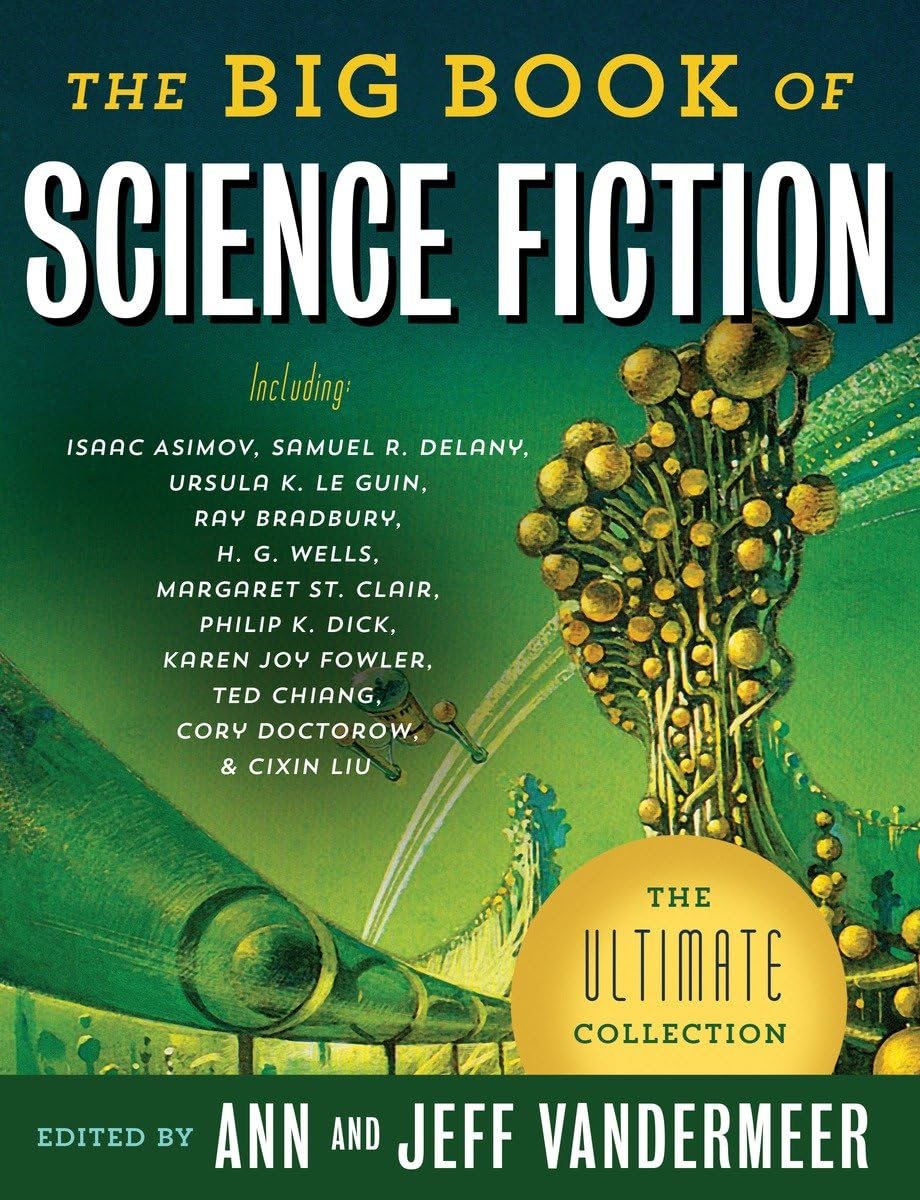
This is the anthology the whole blog post is about.
The VanderMeers are a true power couple of science fiction. Anne has been a long time editor and anthologist across the myriad genres of Speculative Fiction, editing anthologies of horror and fantasy as well as science fiction, and editing fiction for publications like Weird Tales, Tor.com, and more recently Reactor. Jeff VanderMeer has become a major figure in Science Fiction with the success of his fiction, particularly the Area X trilogy, and he has continued to support efforts to promote obscure and forgotten genre classics, editing anthologies and writing introductions for new editions of books like NYRB’s publication of David R. Bunch’s Moderan and Faber & Faber’s publication of Termush by Sven Holm.
One thing I really appreciate about this anthology how the editors use the introduction to stake out their position as contributors to a long running critical dialogue about what science fiction is, how others have defined it, what their position is, and what they think is important to an anthology like this and to the genre in general.
The VanderMeers trace a history of the genre that defines science-fiction as literature about the future. They blaze a trail from Science Fiction’s pre-history in the late 1800s through the pulp era, the golden age, the new wave, the emergence of cyberpunk and the humanists as dueling forces, and the final collapse of sub-genre barricades into a many faceted prism where boundaries are less firm than ever before.
One thing to note is that this anthology is now a decade old. Since the included stories are mostly limited to the 20th century, with only a handful of stories crossing the line on either end, it would be interesting to see what stories would make it into a top-up which anthologized work from the first 25 years of this century (it’s 2026 jesus christ).
A defining trait of this anthology is how it features a large number of international stories, many of which are either appearing in English for the first time, or have received fresh translations for the first time in decades. They’re an exciting mix, including both familiar names like Borges, Lem, and the Strugatsky Brothers but also many figures little known in English SF circles. They provide a different perspective on the genre, and the introductions included with each story allow the editors to write a brief overview of the SF literature of an entire nation or region beyond just the single author featured.
The anthology is simply too big for me to list all my favourite stories one at a time. Here are ten good ones from throughout the book. I’m mostly picking the weird ones you’re less likely to know already, except for the cases where I am not.
A Martian Odyssey by Stanley Weinbaum
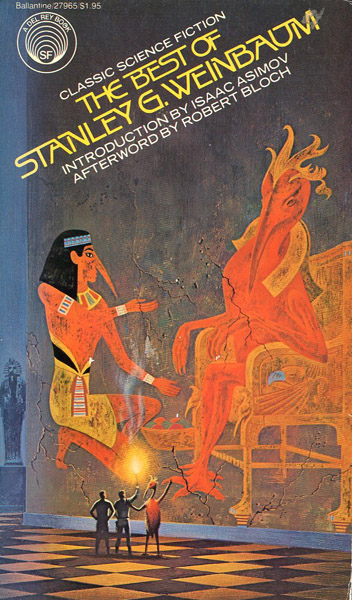
If you ever see one of these Best of's in the wild with the diagonal title like that, grab that shit.
This was my favourite story of the pre-1950’s stuff, although shout-out to the very good very first story in the anthology, The Star by H.G. Wells. Stanley Weinbaum was an early luminary of science fiction who isn’t well remembered today because he died in 1935 at age 33. Could he have been a Heinlein, Clarke, or Asimov if he’d lived to write in the golden age proper? We’ll never know. This is an adventure story with a theme of speculative biology. A martian explorer recounts an adventure where he encountered, befriended, and came into conflict with various martian life-forms. It has a bit of the goofy buck rogers tone common to these early pulp stories, but it’s a lot of fun. Great yarn.
Surface Tension by James Blish
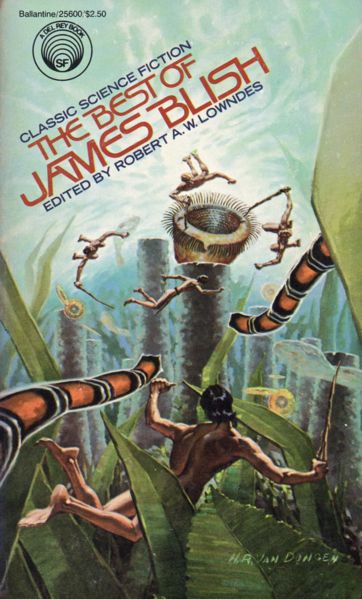
The art of this edition is depicting the action and general vibe of Surface Tension, although I think the humans should look less human.
Blish is an interesting writer, maybe best known for writing a lot of Star Trek novels. He won an early best novel Hugo, for A Case of Conscience, which I read recently and had mixed feelings about. Despite that, the writing was very good, and I’d be happy to read more of his work. This story grabbed me immediately thanks to its strange and clever ideas. A future human civilization is seeding the stars with biologically altered humans who have been shaped to suit the planets they are seeded on. One of these seed ships crash lands on a miserable puddle world and the crew spends the last days of their lives creating a kind of human being that can survive in the low lying puddles that make up the best environment available on the planet. They’re microscopic people! Little human beings with cilia and other weird stuff fighting protists and allying with amoebas and what not. I absolutely love the idea. Is there a bit of a weird human-centric manifest destiny vibe that detracts from the enjoyment? Sure. But the concept is so good, and the overall tone so pulpy, I forgive it.
The Monster by Gérard Klein
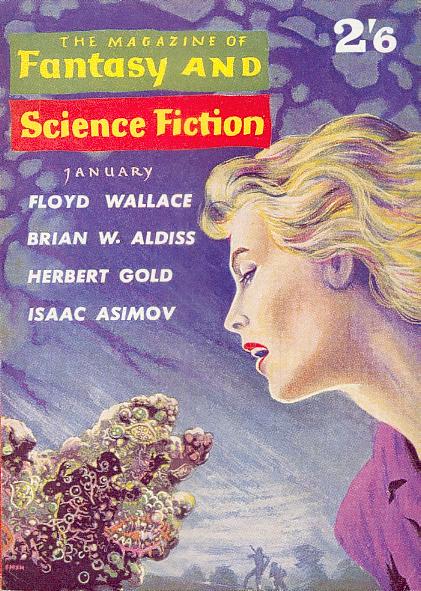
Pretty sure this cover is depicting the climactic event of The Monster (this magazine was it's first English publication).
Gérard Klein was one of France’s premier science fiction writers, and some of his novels were translated and published by DAW in the 70's. This story is about a woman waiting for her husband to come home from work while she listens to the radio describe how the park he crosses on his way home from work has been closed off because an alien has landed there. I had no expectations for this story, and I was pleased to discover it was deeply haunting and unsettling. I picked up one of his novels at a used book store, so I’m excited to give that a try.
Nine Hundred Grandmothers by R.A. Lafferty
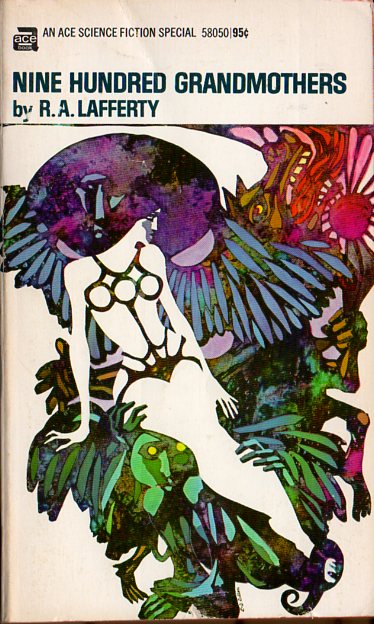
Love these late 60's/early 70's Ace editions with the abstract art and lots of white space, they look so so good. (See modern publishers? It IS possible to have an abstract and artistic book cover that still looks good!)
Everything I’ve heard about Lafferty is that he’s an extremely strange and original writer, and I’m excited to read more of his work. This story, about an anthropologist researching an alien species who claims never to die, is genuinely freaky while also being extremely funny.
No Cracks or Sagging by David R. Bunch
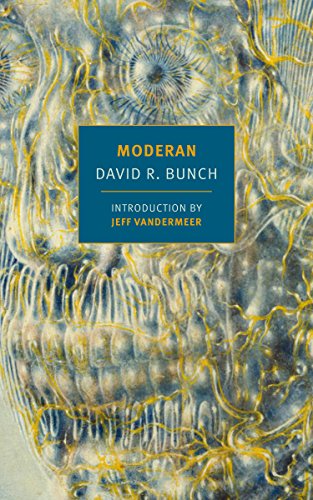
I go sicko mode any time NYRB puts out a SF or Fantasy edition. Excited to dig into this one.
David R. Bunch wrote a lot of stories in a connected universe called Moderan, where in the far future mankind has turned themselves into robots who live in castles and constantly war with each other while the entire earth has been coated in plastic. This is the best of the three Moderan stories included in this edition, and it convinced me to buy the recent NYRB collection of all the Moderan stories with a forward by, would you believe it, Jeff VanderMeer!
When it Changed by Joanna Russ
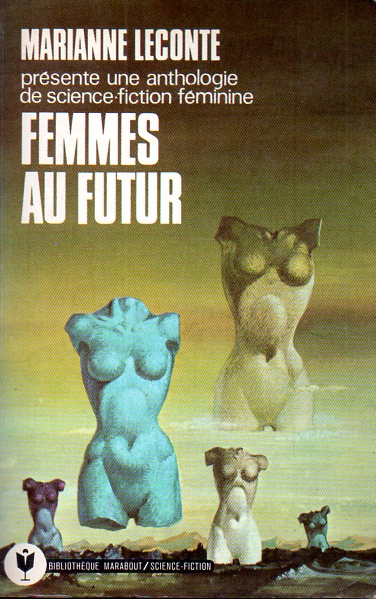
Based on Russ's reputation and the content of this story it's unsurprising it's been anthologized in a bunch of Very Cool anthologies - it was originally published in the second of Harlan Ellison's legendary Dangerous Visions anthologies, but I picked this one for the image because it's a little more on brand for what the story is about.
Joanna Russ is kind of standing in for the entire 60’s/70’s New Wave, and I’ll be honest, I could have picked all 10 of my stories from the New Wave section of the anthology. Ursula K. Le Guin’s Vaster Than Empires and More Slow and James Tiptree Jr.’s And I Awoke and Found Me Here on the Cold Hill Side could easily be in this spot, but I wanted to give the spotlight to Russ, who is undersung compared to Le Guin (not that Le Guin doesn’t deserve every bit of praise she gets), whereas I featured Tiptree a couple blog posts ago AND I have a giant collection of her work that I will be covering capacity in a future blog (or video!).
With that said: Joanna Russ was a huge part of the New Wave, writing several major novels including The Female Man which is probably her most famous work. This story shares a setting with The Female Man, and it is so so so sharp. I don’t even want to describe what it’s about because I think it’s best experienced completely blind, but god it’s good, so short and so sharp.
Sporting with the Chid by Barrington J. Bayley
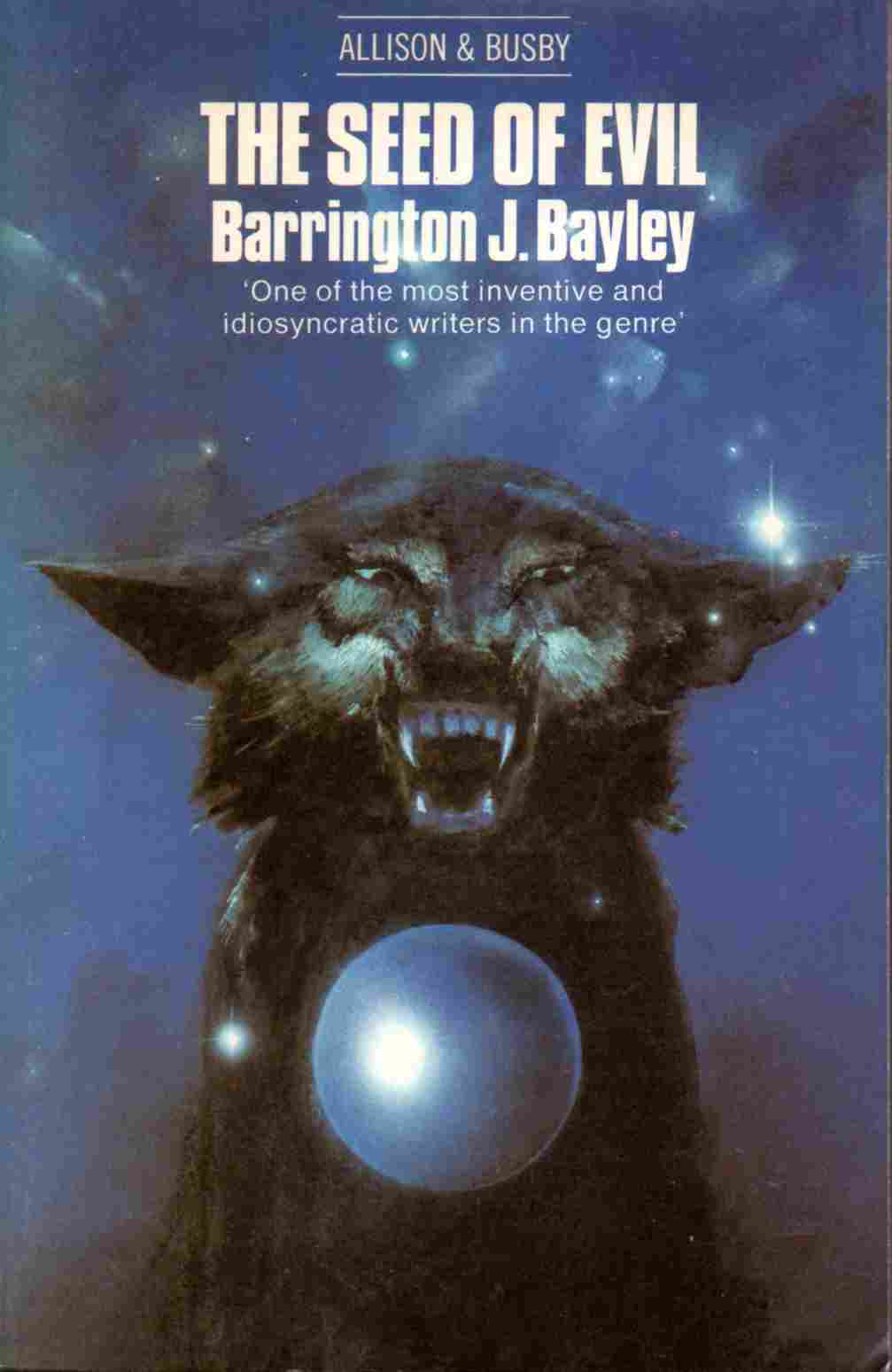
This is the original collection where the story was published - including this version, and the one in the BBoSF, the story has only appeared in print (in English) in three total publications. That's wild - it's so good!
This was the biggest revelation of the whole anthology for me. A writer I had barely heard of, who, after reading this story, I intend to buy anything I ever see with his name on it. A British writer who was respected by British New Wavers like Moorcock, Bayley is largely forgotten today, and this story has barely been reprinted outside of this anthology, which makes it an incredible job of curation by the VanderMeer’s to put it in here. I take my hat off to them. This is the story of a pair of humans whose friend is gravely wounded while big game hunting on an alien world. They seek the help of a mysterious and dangerous alien species called the Chid who are supposed to be brilliant surgeons but are also extremely unpredictable and alien. It’s a truly grotesque story, filled with unpredictable body horror that absolutely blew me away. A new favourite for me. I won’t say it’ll be your favourite, but I promise you’ll read it and say to yourself, “oh yeah, I see why Alex likes that so much.”
Bloodchild by Octavia E. Butler
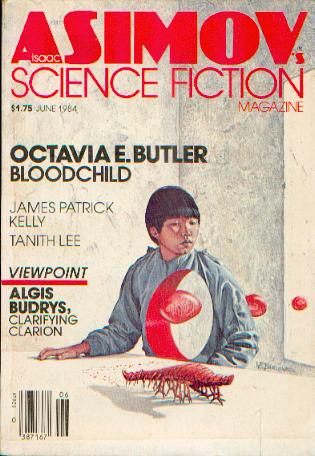
This art is incredible. All the covers for Butler's Bloodchild and Other Stories, her single short fiction collection, are very bland (they want to seem literary I suspect) - she deserves more art like this! This story is freaky! It deserves freaky art!
Probably the most famous of the stories I’m spotlighting, but every time I read Butler I’m just struck by her incredible skill and vision, to the point that I couldn’t leave this off. Having read only her more grounded novels (Parable of the Sower and Kindred) I was very interested to see what she did with a more capital S capital F Science Fiction premise (I know she wrote lots of more high concept SF! I just haven’t gotten to it yet! I will!). This story is so good. It’s another story I don’t really want to describe, except to say that it is handled with Butler’s characteristic nuance, her skill at creating and depicting fraught and emotionally complex social dynamics is on full display, and it’s just superbly written. In their introduction, the VanderMeer’s quote Butler as denying the story is about slavery, but that instead it’s about “paying the rent”.
The Frozen Cardinal by Michael Moorcock
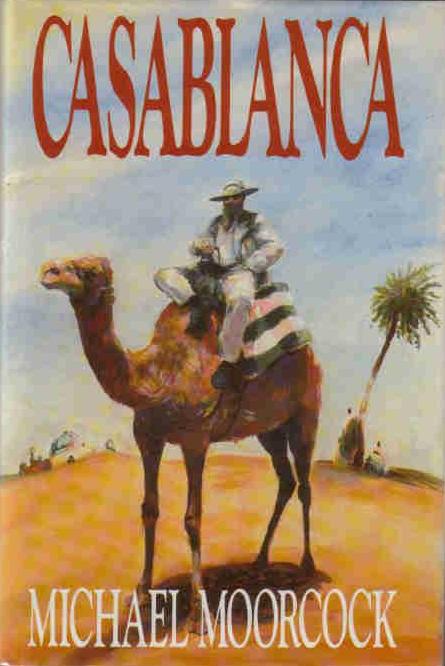
This story has been anthologized a decent number of times but never prominently enough to be featured on a book cover, so please enjoy Michael Moorcock riding a camel.
This one is here because I love Michael Moorcock. The story is extremely good, a flipped version of At the Mountains of the Madness that is surprises and unsettles.
The Remoras by Robert Reed
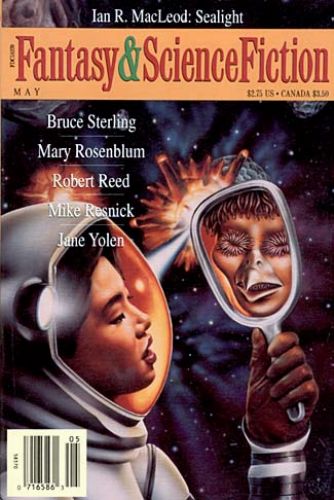
The art kind of gives away the big twist of the story, but that's okay because I think the plot is way less interesting than the setting anyway and the art captures the Remoras' freaky hair eyes. Neat!
This final story stands in for the 90s and early 00s, and so I probably should have chosen Story of Your Life by Ted Chiang, which is without question the best of that section. However, that story is famous, they literally made Arrival out of it, and so you don’t need me to tell you how good it is. Instead I want to talk about The Remoras. I had never heard of Robert Reed, but after this I’m very interested in checking out more of his stuff. The story, set in his Great Ship Universe, features immortal humans venturing on a multi-million year trip around the galaxy. They travel aboard the titular Great Ship, which happens to be supported by a sub-species called Remoras who have mastered the manipulation of mutation-causing radiation which they use to radically transform their bodies. The story is strongest in its world building: the Remoras are so cool, the ship is so cool, but the actual plot and character relationships of the story? I’m not totally sold on them. However, the setting is so cool I recommend the story anyway, and will be seeking out some of the novels set in this universe.
In Conclusion:
What is the big takeaway I had from reading this whole anthology? Reading so much material from a huge expanse of time, from all these different authors, in all these different sub-genres... it really made me exercise my sense of literary taste. Going through this huge anthology gave me so many opportunities to ask myself, do I like this? Why or why not? I went through long stretches where a lot of stories just feel fine or kind of good, and I would start to feel a little numb, but then I’d hit a story that was really really good, and remember that I do feel strongly about some things, I do have opinions. And at the same time, sometimes I’d really hate something, and I’d feel a similar kind of relief at the reminder of my own subjectivity.
I’m very glad I read this anthology. It exposed me to a huge amount of material and made me feel more comfortable talking and thinking about science fiction as a field. I’m excited to read more deeply in the genre and then revisit it and its choices over time. The highest compliment I can pay this work was that it made me want to create my own anthology, or at least become familiar enough with the field that I could try to do so. I want to become familiar enough with the history and present of speculative fiction, (as well as my own taste), to do my own version of this project. That is now a dream of mine.
Links and Recommendations:
Thanks for reading! Physical Annual Zines are in the mail, please let me know when you recieve yours! I will put the zine up digitally once all the physical ones have been recieved. Zine #2 is In Production. In the meantime you can STILL get Hinterlands #1, here.
Working on finishing a second youtube video someday, but in the meantime, check out my one and only video here.
Three Cases from the Cosmic Psychiatric Clinic by Pan Haitian: I'm trying to read more current SF short fiction as well as historical stuff (and not just because I would like to publish some of my own work someday) - to this end I read the current edition of Clarkesworld, and liked a few of the stories but especially this one by a Chinese author freshly translated into English.
Kindred by Octavia Butler: As I mentioned above, every time I read Butler it's a revelation but I thought this was a tier above Parable of the Sower, which I also liked but not to this degree. Kindred is one of the best books I have ever read.
Movie Recommendation Corner: I watched One Sings the Other Doesn't (1977) and The Proposition (2005) last week. Two very different movies, both bangers that get my highest recommendation.
Okay bye!