On Context
I have been a reader of speculative fiction basically my entire life. It started with being enchanted by John Howe’s Hobbit cover as a tiny child, and then falling in love with the story as my mother read it to me. I went on to read the Lord of the Rings, a lot of YA, Douglas Adams, Terry Pratchett, Neil Gaiman, Dragonlance, Star Wars EU novels, and was a hardcore library user. But as a teenage I struggled to make the leap into broader speculative fiction as a whole. There were shelves and shelves at the library in the adult fiction section that were just overwhelming. How did anyone know what to read? The answer came around the time I was sixteen, when I discovered The Infographic.
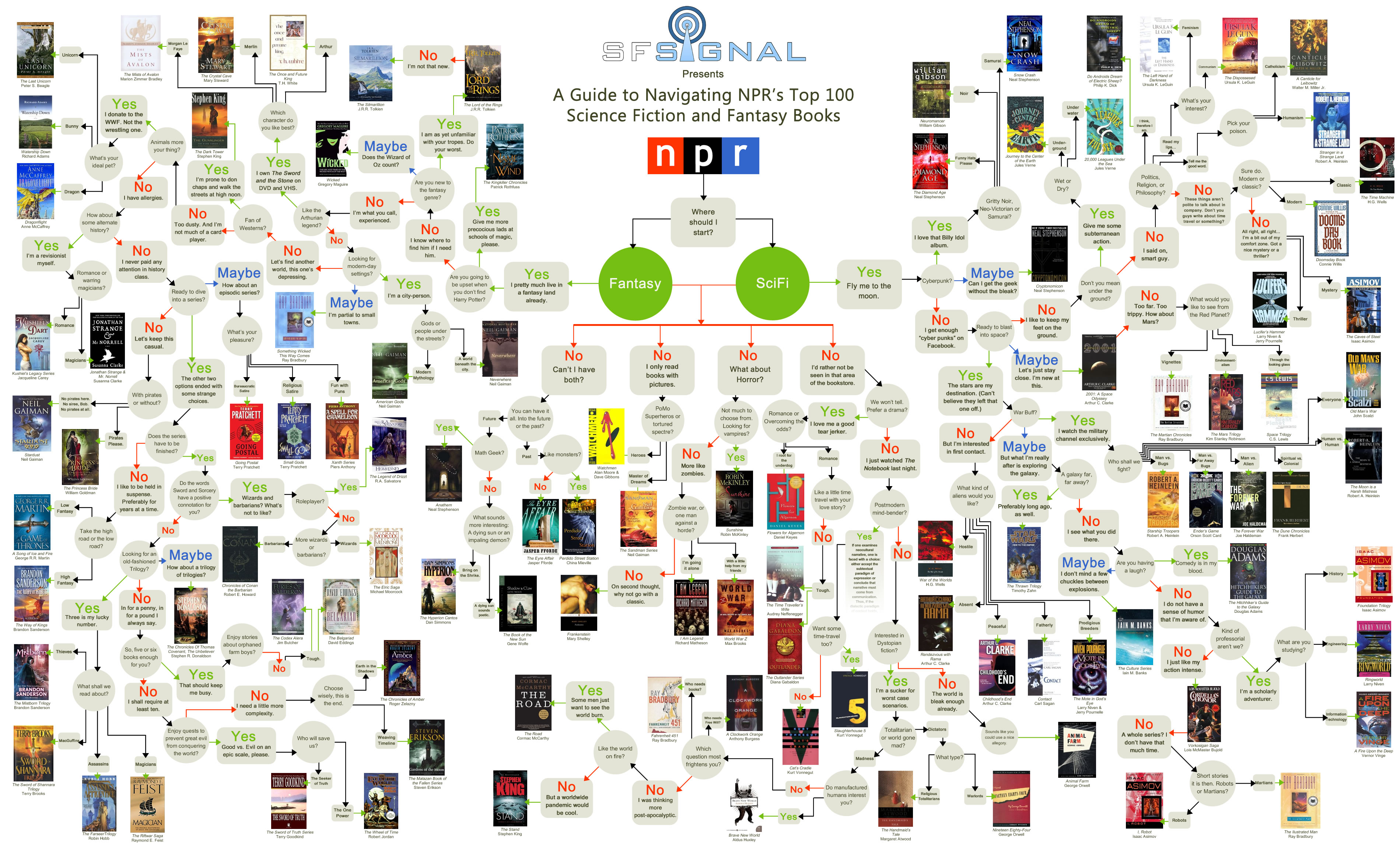
This jpg changed my reading life. 2011 was a strange time.
To explain The Infographic, we start with NPR’s list of the Top 100 Science Fiction and Fantasy Books. This was an online nomination and voting process which engaged 5,000 participants to nominate books, and then 60,000 people voted on those nominees to produce the final 2011 list. The Inforgraphic, produced by SF Signal, takes that list and converts it into a flow-chart, a series of choices that lead you to the book that in theory will best suit your reading preferences. Since it’s 2011, the list is also infused with a sense of humour that at the time might have been called “anarchic” and today might be called “annoying”.
It is not an exaggeration to say that this infographic and by extension, the NPR list, drove my reading of adult speculative fiction for a decade. The list of books that I read specifically because they were on this list is kind of ridiculous in hindsight and is as follows: The Mistborn Trilogy, The Sword of Shannara, The Book of the New Sun, Perdido Street Station, Childhood’s End, The Culture Series, Ringworld, The Foundation Trilogy, Starship Troopers, Ender’s Game, Dune, The Hyperion Cantos, The Caves of Steel, The Diamond Age, Snow Crash, Neuromancer, The Dispossessed, A Canticle for Leibowitz, Stranger in a Strange Land, and The Left Hand of Darkness.
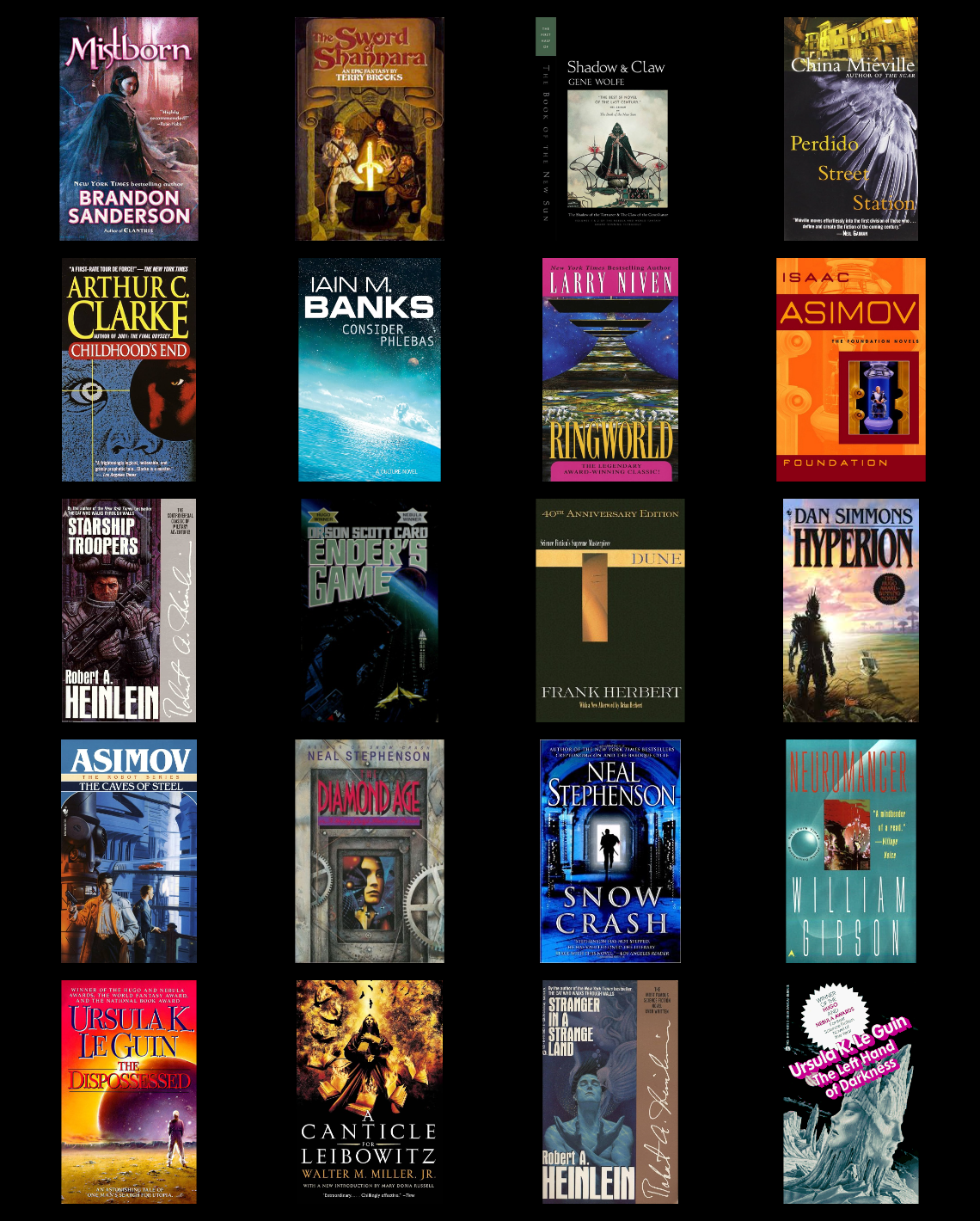
If you think it's strange to mix all these books together willy-nilly, Heinlein next to Le Guin and what-not...read on!
It’s clear to me now, that though this list introduced me to so many genre classics that I’m grateful to have read, whether I ultimately think they’re good or bad, it’s also a very limiting way to understand these genres and reading as a pursuit. This list guided my reading in a positive sense, but it also limited my reading. It fed a selectiveness in me, a choosiness which is not bad in and of itself, but it was unearned, based on nothing but the opinions of a hive-mind, a popularity poll of a readership, the genre book equivalent of the people’s choice awards. The most significant thing I’ve come to realize about this is that this list was context-less.
I was sifting through libraries and bookstores for a handful of titles and knew them only as names on a list. They were not part of a specific time, a specific movement of genre, a work by a person who lived in a context and interpreted other people’s work and ideas through their own experiences and thoughts – they were disembodied points in space, a title, an author, a rating, a series of descriptive characteristics that an algorithm (what is a flowchart but an algorithm?) could use to tell you if you were likely to enjoy it or not. They had been reduced, ultimately, to content.
Last year I came across Andre Norton while writing my Sword and Sorcery zine. She was the first woman to be named a Grandmaster of Science Fiction, and I had never heard of her before. It made me conspicuously aware of my own ignorance, to realize that this woman, incredibly prolific, respected by her peers, an important and influential figure in the genres that I had read my entire life could have entirely escaped me.
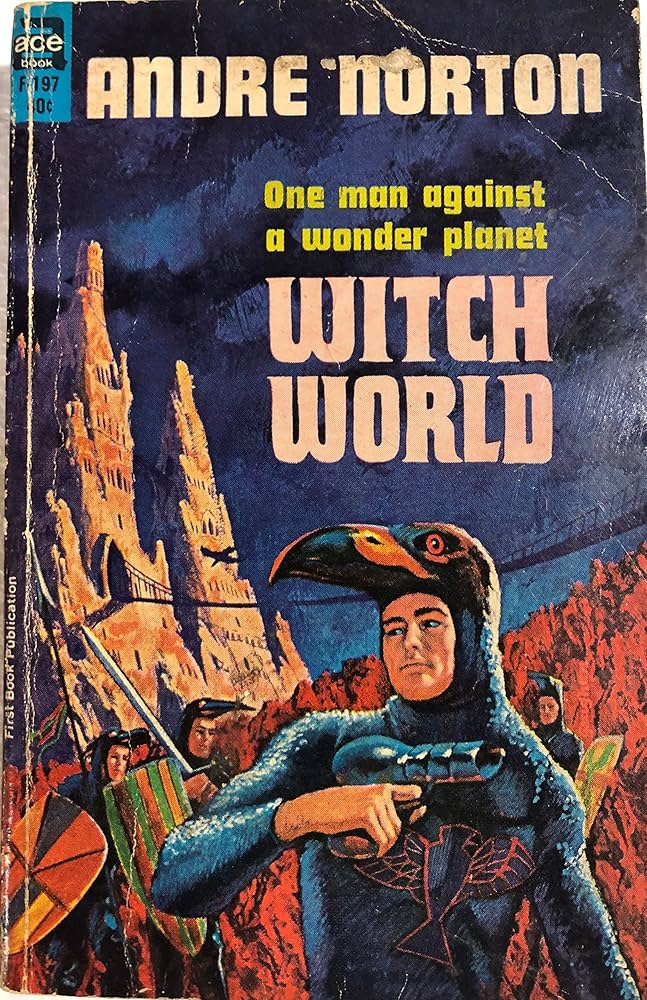
I finally copped Witch World after 6+ months of searching used bookstores - a whole witch world box set actually, fold-out map included. Love this cover. I want to dress as this guy for halloween. No one on earth will know who I'm supposed to be.
That experience gave me/rekindled in me a deep curiosity about the historical context of speculative fiction. The NPR list, a reader voted popularity poll, is not bad. Without it I may never have read or discovered a great many things that ultimately had a huge influence and effect on me. But while a good snapshot of what an extremely wide group of readers think is important, it atomizes those works, removing them from their context, i.e. who their authors were, who those authors were influenced by, and who those authors influenced in turn.
Speculative fiction, particular popular fantasy and science fiction pervades our culture more deeply now than ever, and understanding the genres roots (the good and the bad) gives you a footing to stand upon. This isn’t to say that everyone needs to know who James Blish is, or that even a keen reader of modern spec-fic needs to wade through material they find dry or unpleasant, but I would encourage engaged readers to try. Refusal or inability to engage with the artistic conventions of a different era is not something to be proud of. A combination of the modern technologies of commercial art, (be they rapid editing of visual media or maximal engagement oriented prose) and an ideology of immediate emotional affect (read Immediacy by Anna Kornbluh) encourages us to discard history, context, and any understanding that requires active thought. Fight that implanted impulse!
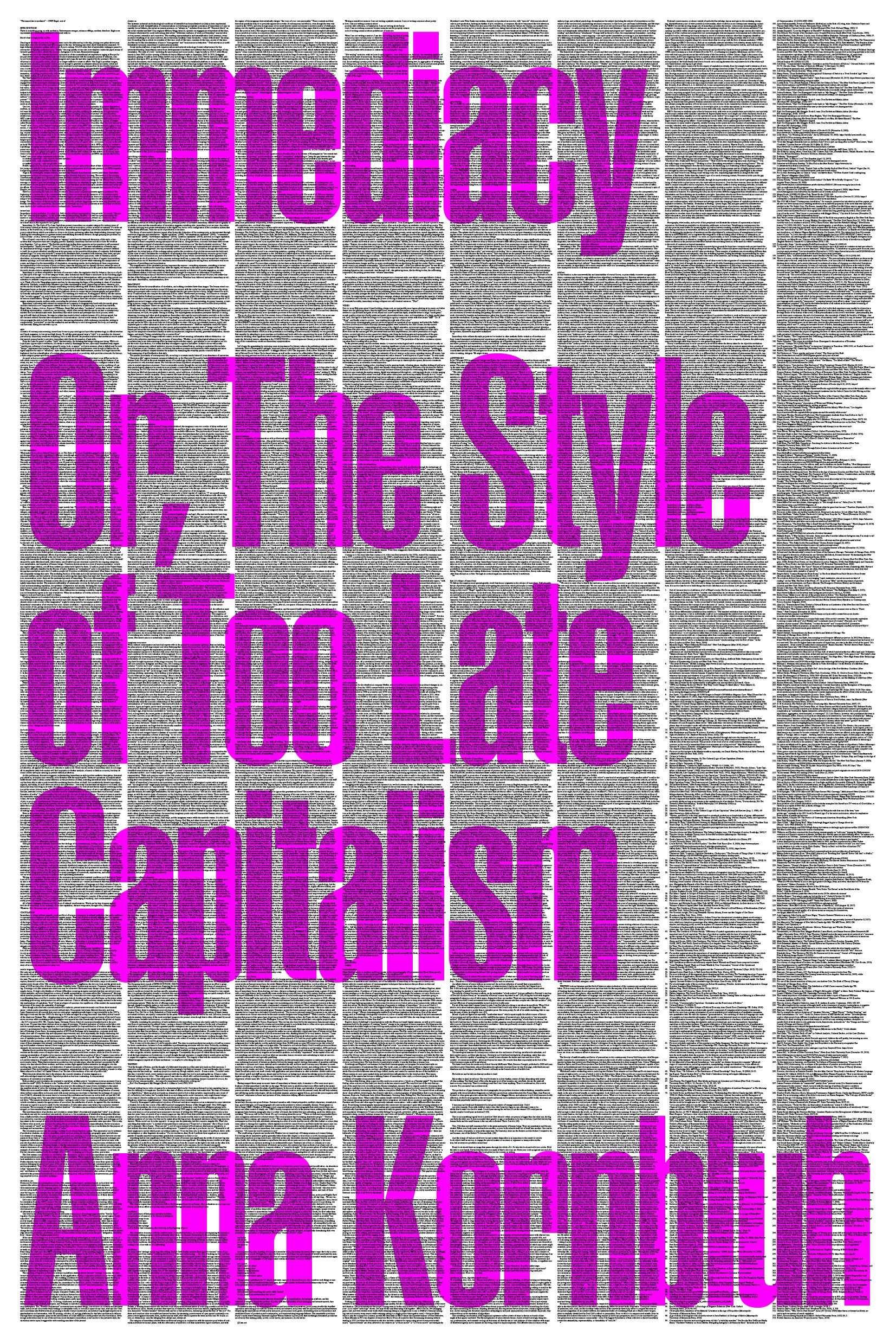
Read this on a whim last year after seeing it on Bluesky and have found it very useful for thinking about the progression of style in mass culture in the neoliberal era (Jimmy Carter to present) - I don't think it's the skeleton key to all media criticism, but it's a great tool to have in the toolbox for understanding What's Going On.
If you’re interested in genre fiction like I am, wrapping your head around the field as a whole means grappling with works in their original contexts. Look at nebula and hugo nominee lists, read short stories, novelettes, and novellas, research authors whose names you don’t recognize. There was more to the golden age of science fiction than Asimov, Clarke, and Heinlein, and the explosion that followed in the 60s and 70s produced more interesting writers and work than just Delany and Le Guin (though they’re a great place to start). Most importantly, read. You gotta read. Read, read, read, so that you can figure out what you think is good and bad on your own. Consensus can be helpful, historical lists like the NPR lists, the David Pringle lists, award winner and nominee lists, all these are good tools, but until you read the work yourself, try to understand what other people like and don’t like about it, and more importantly what you like and don’t like about it, you’ll still be missing The Context. The work itself is as much the context as knowing the history of the author, the genre, and the myriad paratexts that bind it all together.
Ultimately this train of thought was the impetus behind the Hinterlands Canon. I don’t want the Canon to just be a list of my favourite books. I want it to be a project about building context for myself and for others. I want it to be so many things, a recommendation list, a collection of titles that tell the story of a group of interrelated genres, a barometer of my own personal taste, a treasure trove of influence and a reminder to myself to work towards those influences…maybe that’s too many things for one list of book titles to provide. And if I want the list to function as a delivery mechanism for historical context rather than just “a list of books I like”, I probably need to re-organize it in some way. And maybe I will! But that’s what I’m working towards.
One other thing that’s come from thinking through all this is a realization that speculative fiction as a subject area isn’t too big for one person to develop a working knowledge of it. I think back to my childhood and those intimidating library and book store shelves with innumerable titles and authors I didn’t recognize. They felt infinite, and my response to that unknowable infinity was to try and learn the small number of titles and authors worth knowing, and discarding everything else. That was a dismissive attitude, but it was developed as a defensive reflex against a task that seemed insurmountable. Who could ever understand or know all of this?
But on my journey to put these books in their context, I’ve come to realize that this isn’t an insurmountable challenge. Sure, maybe one person can never know EVERY author, every book. But you can know a lot of them. And increased knowledge makes those intimidating library and bookstore shelves friendly and inviting. Is some of it, a lot of it even, still junk? Sure. But even the junk is kind of fun to sift through once you know what it is, where it came from, and where it fits into the big picture. And that’s one reward of context, looking at some strange object from decades ago and knowing where it fits in space and time. Knowing where it came from.
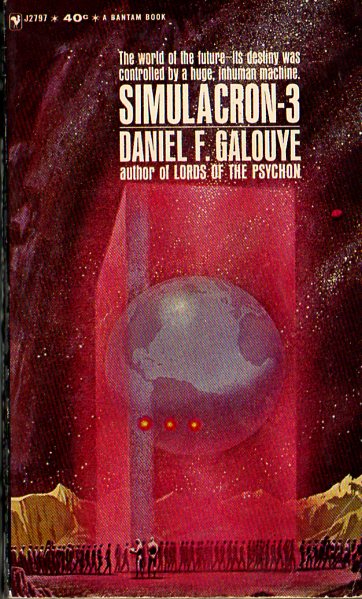
I know where this came from and you can too.
Some authors you might want to know:
I still have a lot of reading to do before I can really start slinging names at you, dear reader, so here are some names that would have felt like deep cuts to me a year ago, and maybe will to you too (but don’t yell at me if they seem basic! Please! I’m just a normal man!)
- Harlan Ellison: Just finished reading his collection The Beast That Screamed Love at the Heart of the World. It ruled. You WILL be hearing more about it from me, sooner or later. Ellison was a notable abrasive and angry guy, but he wrote a lot of well regarded short fiction, and was also well known for editing the Dangerous Visions collections, which aimed to publish the best short stories of major spec-fic authors that the mainstream magazines had deemedunpublishable. They are still regarded as some of the best anthologies of speculative fiction ever released.
- James Tiptree, Jr.: Another well respected author of short science fiction especially in the 1970’s, James Tiptree Jr. was the pen name of Alice Bradley Sheldon, and she was known for stories that subvert and complicate gender and sexuality (the Otherwise award was originally named in her honour). I’ve read her story And I Awoke and Found Me Here on the Cold Hill Side and it both rules and is deeply disquieting. Recommend.
- Cordwainer Smith: A guy who was largely forgotten for decades but some determined folks on the internet shouting about his legendary novel Norstrilia has been bringing him back into focus. I’ve read his story A Game of Rat and Dragon, which turns up frequently on “best science fiction short stories of all time” lists. It’s great and very weird, mixing cosmic horror into the science fiction stew and forecasting some of the psychologically centred writing that would be a fixture of the 60s-70s New Wave writers.
- Bookpilled and MaskedManta (Youtube):Bookpilled and MaskedManta are two youtubers (do people still say that? Is that like derogatory now? If so, sorry) who talk about science fiction and fantasy books respectively (with a little crossover) and both try to feature stuff that is less commonly known. Bookpilled especially has pretty strong opinions about stuff and doesn’t just talk about books he likes. He does a good job of communicating consensus opinions and historical context as well as his own opinion, which is both interesting and useful. MaskedManta does a great job of showcasing weirder and rarer fantasy work. Both awesome channels that I have found to be very good resources for learning more about the two genres.
- SFADB:A combination awards blog and awards database for speculative fiction. Also has a great summary of the history of speculative fiction short fiction anthologies.
- ISFDB: It is what is says on the tin. An online database of speculative fiction. Every author, every book, every printing. I really like that you can open up a visual showing the cover of every edition of a book ever published, making it really easy to identify your specific edition.
- The Encyclopedia of Science Fiction:Originally a printed encyclopedia, it’s also incredibly useful, particularly with authors you’ve never heard of before. If you see like 30 books by somebody you’ve never heard of at the used bookstore, this is a great resource to figure out whether you might be interested in them and what you should look for out of their work. There was a printed fantasy edition (which I own!) but it wasn’t converted to a website as far as I can tell.
Links and Recommendations:
Thanks for reading my first blog post in a few months. I moved and so everything has been stalled out, including this blog and my zines. The next Hinterlands Zine, Annual 2026, is going to be going digital later this month, but in the meantime you can still get first Zine, Hinterlands #1, here.
I'm not sure what's going to happen with my youtube channel, but I do intend to get some more videos on it soon. In the meantime, check out my one and only video here.
Okay bye!